


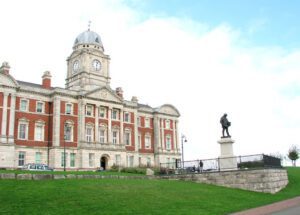
Barry Wales – United Kingdom
Located in South Wales, Barry lies roughly south-west of the centre of the UK, in The Vale of Glamorgan about ten miles west of the capital of Wales, Cardiff. In ancient times, Barry Island was famous because St. Baruc lived on it. In olden days, it became infamous for pirates and wreckers. Barry Island ceased to be an island in the late Victorian era, when they dug out the docks, and used the spoil to make a land bridge to the mainland.
Barry Wales Heritage
When my grandparents were youngsters, Barry was the exporter of the most coal in the world. I believe that it still holds the world record of a million tons in one year. However, that was more than a hundred years ago. My parents told me stories of being able to walk across Barry Docks by hopping from ship to ship. They were so tightly packed in when they were teenagers. They also told me that Barry had the greatest difference between high and low tide of anywhere in the world. About 44 feet, I think.
Owen Jones – Welsh Writer
My name is Owen Jones, and I am a novelist from Barry Wales. The Colcot, to be specific, which is north-east of the town centre, on the way to Cardiff.
I grew up in Barry-Wales in the Fifties and Sixties, so just after the Second World War. Barry escaped relatively unscathed from the bombing, or so I gather, because nearby Cardiff was deemed a more important target. I enjoyed my youth there. It was busy and there was plenty to do. There seemed to be lots of work too, and there were leisure facilities galore. My particular favourites were Saturday Morning Cinema Club, and the outdoor public swimming baths, although various types of beach with clean water practically surround Barry. The rip tides were dangerous though, so I preferred the pool.
Then I left Barry-Wales for university in Portsmouth for five years, and almost ten years abroad in The Netherlands. Eventually, I returned ‘for good’ in my early thirties. I remember feeling that I had to be shoehorned back into Barry after the freedom of living in continental Europe. I don’t mean political freedom of course, but the English Channel is quite a mental barrier. For example, if I became bored in The Netherlands, I could hitch-hike to the South of France in a day or so. From Barry, I would have to get to the channel (175 miles), cross that (about eight hours) and then start travelling again. It takes the edge off it.
Yes, flights were an option back then. However, they were not the mode of transport that sprang first to my mind, as they would nowadays. Doesn’t anyone hitch-hike any more? It’s probably deemed unsafe 🙁
Life in Barry Wales
I worked very happily with my brothers in my father’s local construction firm for about fifteen years until he died, work dried up, and we all went our separate ways. That was when Barry-Wales started to go down hill too. Perhaps, I’m exaggerating because my father died and our firm went bust, but I think that it is more than that. There were two big, Edwardian (or Georgian) pubs in the town centre – The Vic(toria Arms?) and the Windsor Hotel. In fact, both were built as hotels but never used as such. One day, the Vic closed down! It was such a shock.
Within a few years, they had knocked it down and replaced it with a Tesco’s. The huge Royal Hotel in Cadoxton is now a Tesco’s too… and the massive Barry Hotel became a theme ‘disco’ for a while before also closing down. The same fate befell the large Romilly Snooker Hall. The council filled in our swimming pool too and built houses on it. Pubs and clubs, not to mention shops, were closing down at an alarming rate. Even Butlin’s Holiday camp on Barry Island, which had already changed hands several times, was demolished to build houses.
In my youth, it had brought in 3,000 happy, enthusiastic visitors a week in the summer. Those, mostly young, holiday-makers, rarely left the Island and its Pleasure Park and brought in a lot of money. A large proportion of Barry’s youth got their first job in Butlin’s or on the fairground. I did too, ‘on the jets’! Cheap flights to Spain and all-inclusive holidays probably killed that cash cow.
Barry’s Death Rattle
A sure sign that Barry had given up any lingering hopes of becoming a prosperous industrial town ever again was when they filled in Barry docks and built upon it. Tourism finally died too when the once beautiful Barry Island beach lost all its sand, because of dredging near Bristol. How many hundreds of thousands of people used to go to that beach every year? Miners saved up all year round for two weeks’ holiday on Barry Island for decades. The renowned and much-awaited Miners’ Fortnight, when money was no object and people partied for weeks on end. All gone now. It’s not so much that these things have gone, but that there are no modern equivalents!
When they close Cardiff Wales Airport, and the subject is always on the agenda, Barry Wales can just roll over and go to sleep like Rip van Winkel, although it will probably never rise again. The people of Barry have always loved Rhoose Airport, as we still call it.
It is best not to treat the above events as a trustworthy timeline, I don’t remember the exact order, but it isn’t really important, because they happened so quickly – within two decades.
Exile from Barry Wales
At this point, I went to live in Thailand, but still returned every now and again with my Thai wife. We even tried living there between 2018 and 2020, but Priti Patel was too powerful and spitefully made obtaining a residence permit too difficult, so we returned to Thailand just before Covid-19 broke loose. I was more than pleased to get out of Barry, which had become a very sad, pale reflection of what it had been even in my memory, although my wife loved it there. She hadn’t known it before – in its glory days though, and perhaps, nether had I.
We will always return to Barry-Wales, for a holiday, but it is now just a dead, residential suburb of Cardiff, where most of those who have a job go to work, and those with any money go to spend it.
PS: I recently read that Barry wales now has the third largest difference between high and low tide. It’s very sad that it has lost the distinction of first place, but it seems rather apt in a way 🙁
Discover more from Megan Publishing Services
Subscribe to get the latest posts sent to your email.


You must be logged in to post a comment.