
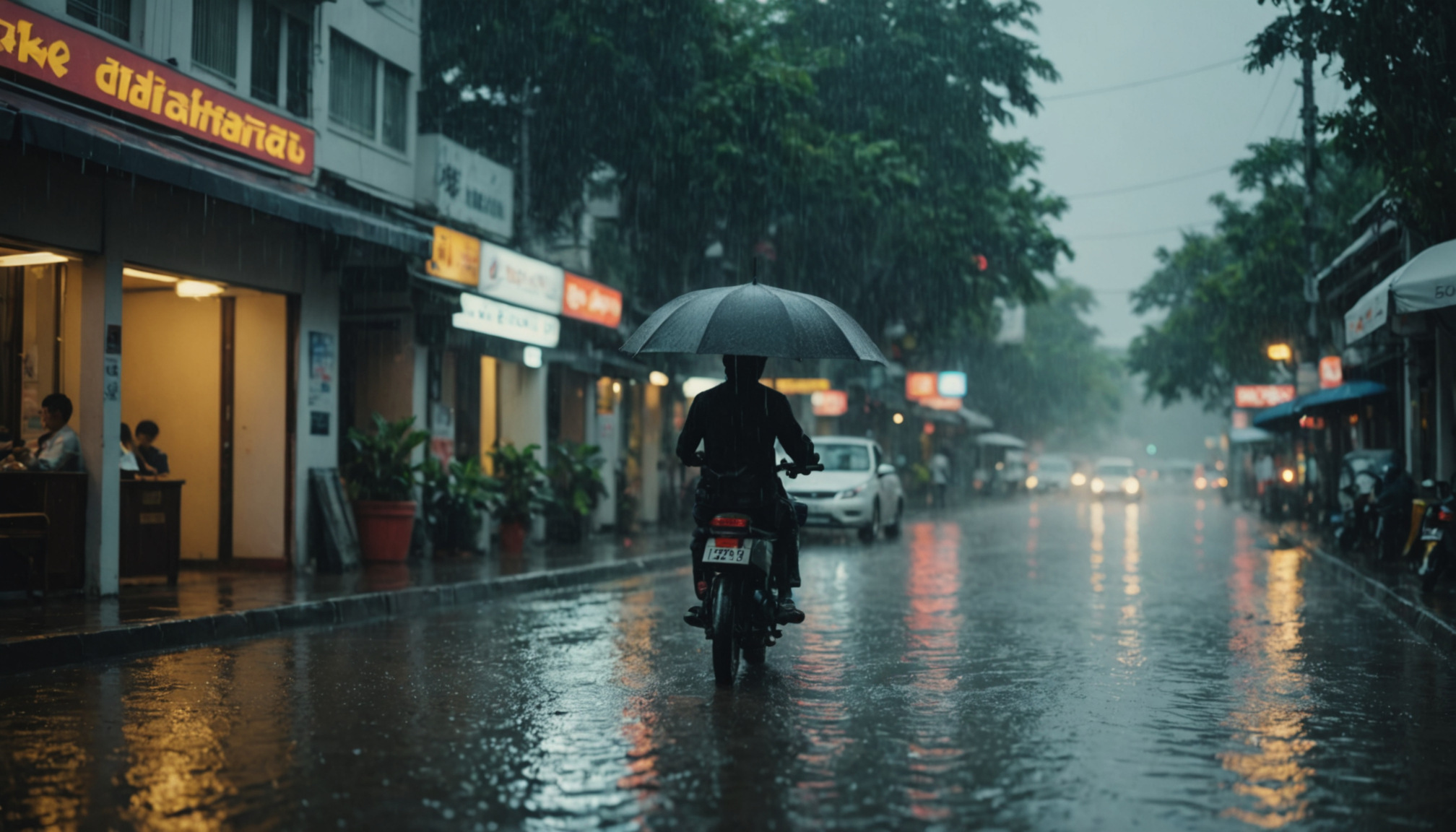

The Bi-annual Monsoon Replenishment of the Water Table
I mention the province of Uttaradit because it’s the area I know best, although I realise that one’s Monsoon experience can differ from province to province. I’ve lived here for twenty-one years at the time of writing.
When I first arrived in August 2004, I was told that the daily downpour was the result of the mini-Monsoon — or Monasoom, as people pronounce it locally. For thousands of years, until about fifteen years ago, the weather here had been described as extremely reliable. (It is usually written with a capital letter here – perhaps it used to be seen as a kind of demi-god previously).
A Typical Year’s Weather Pattern
From November to January, the air cools. Then the heat began to return. By late March, it is too hot for the children to go to school. Songkran – when Thais pray for rain – always begins on 13 April. Foreigners often call it the Water Festival, but in truth it is the traditional Thai New Year. It is one of the few, if not only, Thai festival that is not moveable, as most of them depend on the condition of the Moon.
Historically, the old Thai calendar had thirteen months of twenty-eight days each. Two weeks after Songkran, the big Monsoon would arrive – always in May. That heavy rain would last about a month, followed by two dry months. In August, the mini-Monsoon would return, almost to the day.
The Big Monsoon
But around fifteen years ago, I saw that clockwork regularity break down. The big Monsoon was six weeks late – something nobody had witnessed before. People were shocked.
These days, a late Monsoon no longer surprises anyone. Farmers have adapted with pumps, irrigation, and machinery, but not so long ago, ordinary people here were deeply worried when the rains failed to come when they were traditionally expected.
Back to Author Notes