

A Guide to Ginseng Tea
What makes ginseng so special?
Ginseng tea has been used medicinally for over 2,000 years, and it has earned that longevity. The two most widely used species – Asian ginseng (Panax ginseng) and American ginseng (Panax quinquefolius) – both contain a group of active compounds called ginsenosides, which are unique to the Panax genus and thought to be responsible for most of the root’s effects on the body.
Traditional practitioners have long distinguished between the two varieties. Asian ginseng is considered warming and stimulating – better suited to fatigue, physical performance, and male vitality. American ginseng is regarded as cooler and more calming, making it a better fit for stress-related exhaustion, blood sugar support, and gentle immune strengthening. Both are valuable; the right choice simply depends on what you are looking for.
What ginseng tea may do for you
The most consistently reported benefit of ginseng tea is improved energy – not the sharp spike of caffeine, but a steadier, more sustained alertness that comes without the subsequent crash. This is what adaptogens do: rather than stimulating the nervous system directly, they help moderate the body’s stress response, which in turn supports more stable energy levels throughout the day.
Cognitive function is another area where ginseng has attracted real research interest. Several studies have found improvements in working memory, concentration, and mental stamina with regular ginseng use, making it a popular choice among those who need to stay sharp under pressure.
Immune support rounds out the trio of most commonly cited benefits. The polysaccharides in ginseng root are thought to enhance immune activity, and American ginseng in particular has been studied for its ability to reduce the frequency and duration of colds and upper respiratory infections.
How to make a good cup
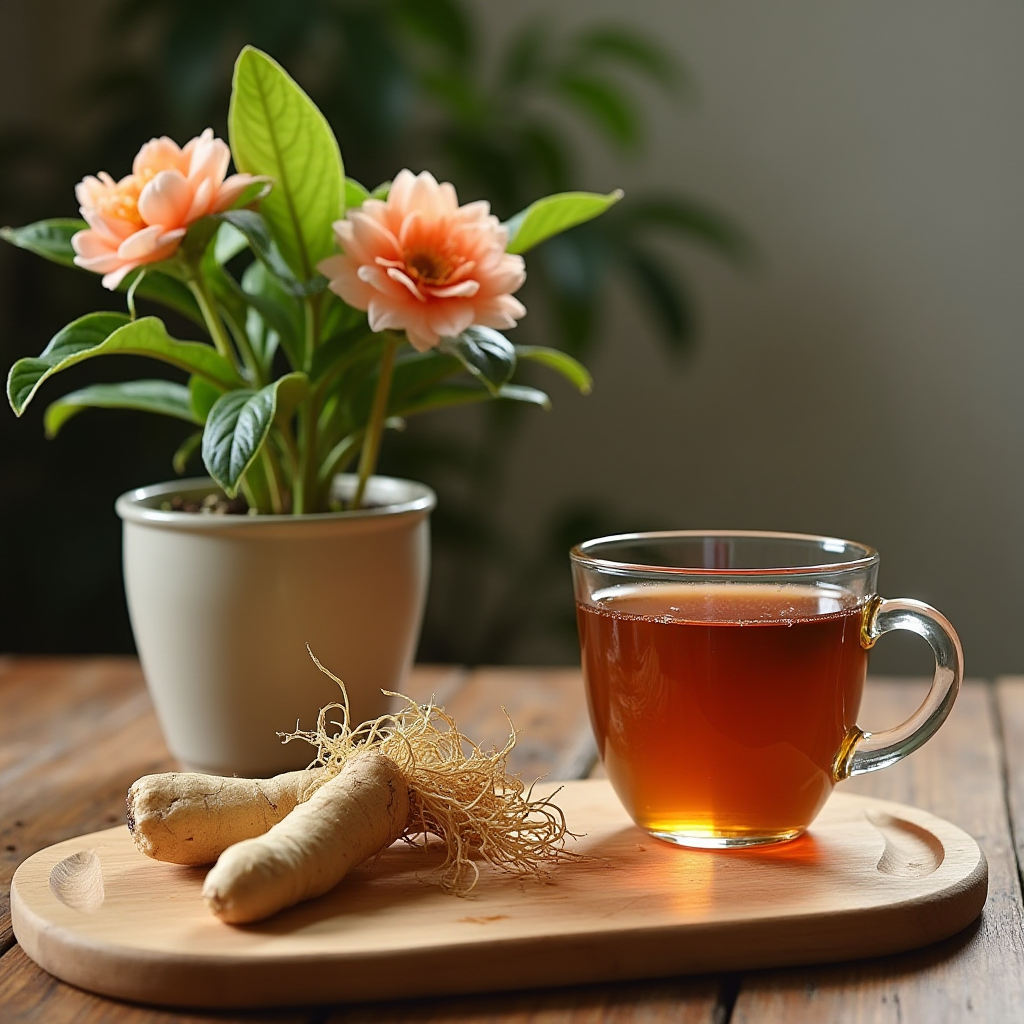
Loose dried ginseng root slices give the best results. Use one to two teaspoons per cup, pour water at around 90°C over the root, and steep for five to ten minutes. The root can be infused two or three times – the second steep is often the smoothest. Ginseng’s flavour is earthy, mildly bitter, and slightly woody; a little honey softens it nicely, and it pairs well with ginger or cinnamon.
If loose root feels like too much effort, ginseng tea bags are a perfectly good everyday option.
A few things to bear in mind
Ginseng is not for everyone. It may interact with blood thinners, diabetes medications, and certain antidepressants, and it is not recommended during pregnancy. Asian ginseng is stimulating enough that taking it late in the day can interfere with sleep. And as with all herbal teas, it works best as part of a sensible daily routine – not as a substitute for sleep, movement, or a decent diet.
One to two cups a day, cycled over four to six weeks with a short break between rounds, is the approach most traditional practitioners recommend. Used that way, ginseng tea is one of the most rewarding herbs you can add to your daily routine.
Visit our Herbal Tea Shop to find both Asian and American ginseng in loose leaf and tea bag form.
Do you read novels? Visit our bookshop to check out the ‘culturally grounded, Otherworldly narratives’ by Owen Jones.