

Loose Leaf vs Tea Bags –
Which Is Better for Health and Flavour?
When comparing loose leaf vs tea bags, most people assume the difference is purely about convenience. In reality, the choice affects flavour quality, chemical composition, extraction efficiency, and sometimes even health value.
This guide examines the evidence behind loose leaf tea and tea bags — without marketing exaggeration — so you can decide which is better for your priorities.
What Is Loose Leaf Tea?
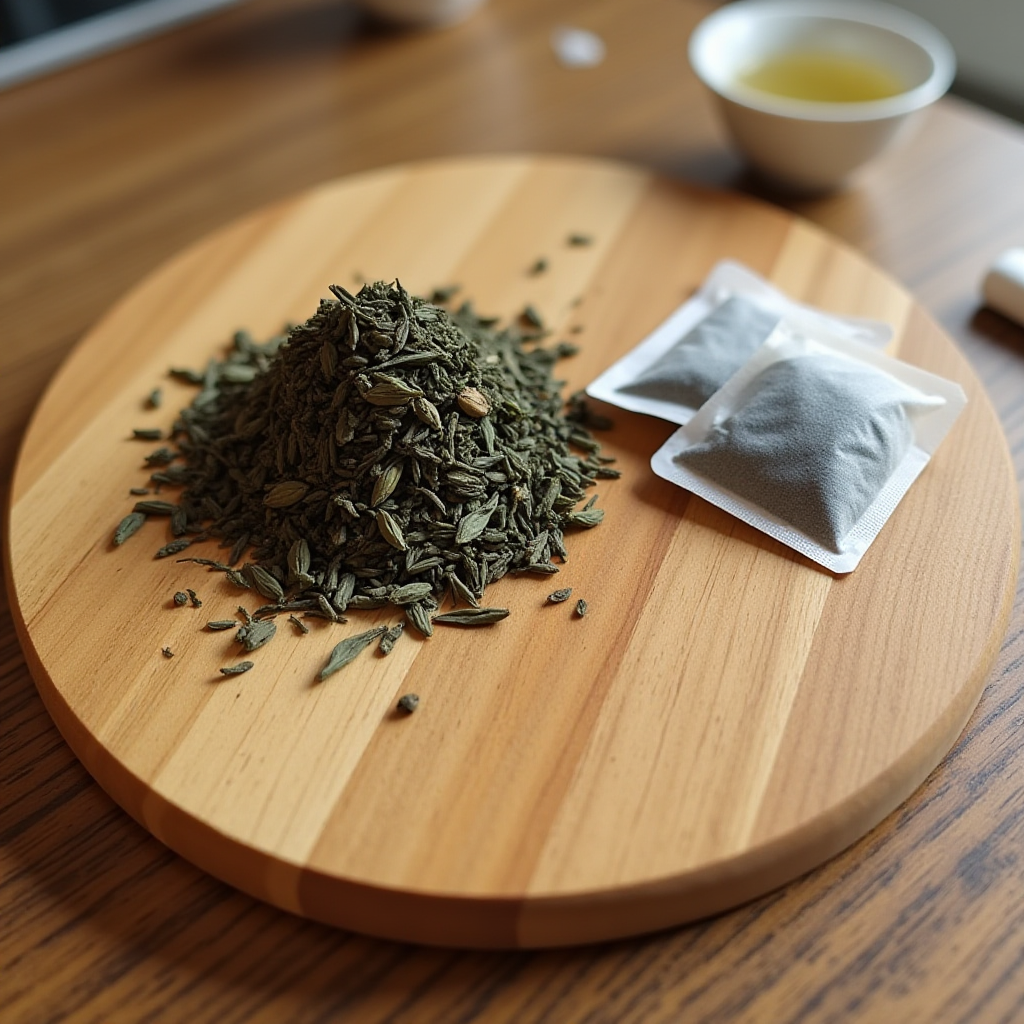
Loose leaf tea consists of whole or large-cut dried leaves, flowers, roots, or berries. The material remains visibly intact.
Characteristics:
- Larger particle size
- Minimal mechanical processing
- Greater surface integrity
- Often sold by weight
Loose leaf applies to both true tea (Camellia sinensis) and herbal infusions.
What Are Tea Bags?
Tea bags typically contain smaller particles — often referred to as “fannings” or “dust.” These are fragments left after larger leaf grades are separated during processing.
Modern tea bags come in three main forms:
- Traditional paper bags
- Pyramid mesh bags
- Biodegradable plant-fibre bags
Particle size is usually much smaller than loose leaf.
Flavour – Which Tastes Better: Loose Leaf vs Tea Bags?
Why Loose Leaf Often Wins
Flavour depends heavily on volatile oils and delicate aromatic compounds.
Loose leaf tea:
- Preserves essential oils better
- Allows leaves to unfurl fully
- Extracts more evenly
When leaves expand in water, they release compounds gradually. This often produces layered flavour – especially noticeable in herbal teas such as chamomile, hibiscus, or peppermint.
See ‘Where to buy High-Quality Herbal Tea‘.
Why Tea Bags Taste Stronger – But Not Necessarily Better
Smaller particles extract faster. That means:
- Stronger colour
- Faster bitterness
- Higher tannin release
Quick extraction can create a more aggressive taste profile. Some people prefer this. However, it is often less nuanced.
Conclusion on flavour:
Loose leaf usually offers superior depth. Tea bags prioritise speed and consistency.
Health Differences: Is One More Beneficial?
The loose leaf vs tea bags debate often centres on health.
The main variables are:
- Surface area
- Oxidation exposure
- Storage conditions
- Ingredient transparency
1. Surface Area and Oxidation
Smaller particles in tea bags are exposed to more air during processing and storage. Increased oxidation can degrade some sensitive compounds over time.
Loose leaf generally retains more structural integrity.
However:
For most herbal teas, the difference is modest rather than dramatic.
2. Chemical Extraction
Tea bags extract faster due to fine particles. That does not automatically mean stronger health benefits.
Extraction depends on:
- Temperature
- Steeping time
- Herb quality
Loose leaf allows better control over dosage and blending.
3. Ingredient Transparency
Loose leaf usually allows you to see:
- Whole chamomile flowers
- Real peppermint leaves
- Whole hibiscus petals
With tea bags, especially low-cost varieties, the contents are not visually verifiable.
For therapeutic intent, ingredient visibility matters.
Microplastics and Bag Materials
Some synthetic pyramid tea bags have been shown in laboratory studies to release microplastic particles when exposed to boiling water.
Paper bags generally do not present this issue, though they may use minimal sealing agents.
If avoiding synthetic exposure is important to you:
- Choose loose leaf
- Or select certified plastic-free tea bags
Here the BBC states: “Your tea might contain microplastics – research finds plastic-lined teabags shed tiny particles”.
Convenience vs Control
Tea Bags
Advantages:
- Quick
- Portable
- Pre-measured
- Minimal clean-up
Disadvantages:
- Less control over strength
- Often lower-grade leaf
- Limited blending flexibility
Loose Leaf
Advantages:
- Better quality control
- Adjustable strength
- Greater freshness
- Superior flavour potential
Disadvantages:
- Requires infuser or teapot
- Slightly more preparation time
Cost Comparison
Loose leaf often appears more expensive upfront. However:
Because whole leaves expand and extract efficiently, you may use less per cup.
Low-grade tea bags may require double-bagging for desired strength.
On a per-cup basis, quality loose leaf can be comparable in cost.
Environmental Impact
Loose leaf:
- Minimal packaging
- Often sold in recyclable pouches
Tea bags:
- Individual wrapping
- Potential plastic mesh
- Greater packaging waste
From a sustainability perspective, loose leaf generally has lower packaging waste.
Which Is Better for Herbal Tea?
For herbal infusions specifically:
Loose leaf tends to be superior because:
- Many herbal ingredients are bulky (flowers, roots, bark)
- They require space to expand
- Whole pieces retain volatile oils better
Tea bags can compress herbs tightly, limiting expansion and extraction.
If your goal is mild digestive support, sleep support, or circulatory herbs, loose leaf gives better control.
See Contaminants in the Food Chain for more details.
When Tea Bags Make Sense
Tea bags are practical when:
- Travelling
- At work
- Brewing in limited environments
- Sharing tea with guests
For routine convenience, they are perfectly acceptable.
Does Loose Leaf Mean Stronger Health Effects?
Not necessarily.
Quality matters more than format.
High-quality tea bags can outperform poor-quality loose leaf.
Key factors:
- Freshness
- Proper storage
- Correct steeping time
The format influences potential, but ingredient quality determines outcome.
Understanding whether a product is herbal or true tea also matters — see Herbal Tea vs True Tea.
Practical Recommendation
If flavour and ingredient transparency matter most → choose loose leaf.
If speed and convenience matter most → choose high-quality, plastic-free tea bags.
If therapeutic intent is your priority → start with loose leaf for better dosage control.
For a broader overview of how herbal infusions support wellbeing, see our main guide on Herbal Tea Benefits.
Frequently Asked Questions
Is loose leaf tea healthier than tea bags?
It can preserve more intact plant compounds due to lower processing, but the difference is usually moderate rather than dramatic.
Do tea bags contain lower-quality tea?
Often, but not always. Premium brands use whole-leaf pyramid bags.
Are tea bags bad for you?
Paper tea bags are generally safe. Some synthetic mesh bags may release microplastics when exposed to boiling water.
Does loose leaf contain more antioxidants?
Potentially, due to reduced oxidation during processing, but freshness and herb quality matter more.
Final Verdict
The loose leaf vs tea bags debate is less about right or wrong and more about priorities.
Loose leaf offers:
- Better flavour
- Greater control
- Often higher visible quality
Tea bags offer:
- Speed
- Simplicity
- Consistency
Neither is inherently superior in all contexts. Choose based on purpose, quality, and how seriously you take your tea.
For a complete overview of evidence-based health effects, see Herbal Tea Benefits.
Further Reading
For a full evidence-based overview of herbal tea benefits, safety, and quality considerations, read our complete guide to Herbal Tea Benefits.
Visit our bookshop to peruse novels by Owen Jones.