


Understanding Thai Village Greetings
I come from a medium-sized town in South Wales in the 1950s. My mother taught me to greet older strangers and to step off the pavement to let them pass. People would usually respond with kind smiles, and even pat my dog if she was with me. That was normal then, and I continue to do it now, sixty-odd years later.
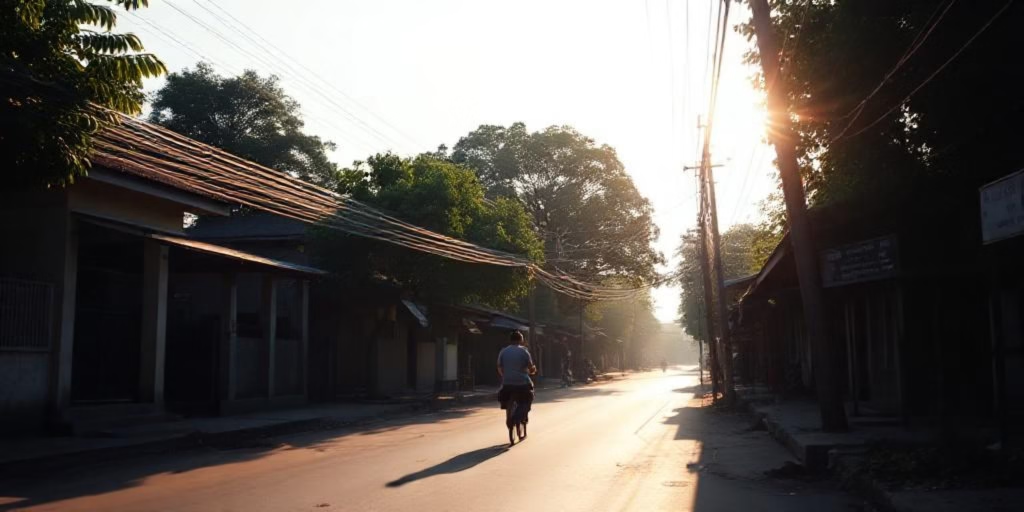
The biggest difference is that I now live in a small, remote Thai village, and people don’t do that here. Or, they don’t in general.
I’ve lived in this village for over 20 years – longer than any of the children here. Despite that, about 90% of women and 85% of men completely ignore my friendliness when I greet them on the main street through the village. On the main drag, very few people greet one another. Women will often give me one of those ‘what do you think you’re looking at’ stares, and men just look straight through me. Even my mother-in-law won’t acknowledge me on the main street.
Are they afraid someone might get the wrong idea? And if so, what idea could that be?
There are exceptions: a few people hold up a hand in greeting and smile as they zoom past on their motorcycles – but not many. I sometimes wonder if they’re doing it to humour the old foreigner.
What’s most puzzling is that this pattern only applies to the main road. If I meet any of the same people on a side street, they greet me warmly. I’m talking about exactly the same individuals. On the quiet lanes, there are smiles, waves, and sometimes even a friendly chat. On the main road? Nothing.
This is completely alien to me. So I asked ChatGPT whether this is typical.
Understanding Main Street Silence vs Side Street Warmth
ChatGPT offered some illuminating insights that helped me see this behaviour differently. Here’s the core of what it explained:
1. The Power of Setting
People unconsciously change their behaviour depending on where they are. Main roads in villages are more public, more formal, and more exposed. They’re places for purpose and movement — not for lingering or informal exchanges. Side streets, on the other hand, are more private and relaxed, where people feel less observed and more at ease.
2. Thai Cultural Norms and Public Reserve
Thai village life highly values nonverbal harmony. Publicly greeting someone – especially a foreigner of the opposite sex – might be misinterpreted. For example, a woman greeting a farang (foreigner) man on a busy street could attract gossip or raise questions. So, villagers might avoid any appearance of impropriety or unnecessary attention.
Even family members, like my mother-in-law, might refrain from greeting me in public to avoid feeding local chatter. It’s not coldness – it’s protection.
3. Status and Outsiderness
Despite being here for decades, I’m still a cultural outsider. People may respect me privately, but public acknowledgment comes with social risks for them. It’s often safer to say nothing than risk being judged.
4. Quick Gestures: The Motorcycle Wave
Those who smile or wave from their motorbikes are making a safe compromise: a polite, fleeting gesture that doesn’t break cultural norms or invite deeper interaction.
Is This Universal?
To a degree, yes. Similar social dynamics exist in villages around the world:
- In southern Europe, men and women often don’t greet casually in public.
- In Middle Eastern villages, greetings are also shaped by gender, status, and setting.
- Even in the UK today, the easy friendliness I remember from my youth has faded.
But Thai village culture is especially nuanced, and what might seem rude to a Brit is often just a form of social caution or modesty.
Final Thoughts
I’m not being ignored out of malice or dislike. I’m encountering a set of unspoken rules about context, propriety, and perception. On quiet side streets, those rules loosen — and the warmth I receive there is real.
So I’ll continue greeting people, even if they don’t always respond. And I’ll do so with the understanding that Thai social logic is just that — social logic, not personal rejection.
If you’re an expat or visitor in a Thai village, don’t take the silence personally. It’s not about you. It’s about the street you’re on.
Thanks, ChatGPT, for helping me see the smiles in the shadows.
If you’d like to read about other things I have found out about Thailand, this is to the first chapters of one of my series, Behind The Smile:
Behind The Smile Series – https://meganpublishingservices.com/first-chapters/behind-the-smile-series/
The paperbacks are here:
https://bookshop.org/shop/Welsh-Writer
Discover more from Megan Publishing Services
Subscribe to get the latest posts sent to your email.


You must be logged in to post a comment.