


Herbal Tea Benefits: Evidence, Safety & What Actually Works
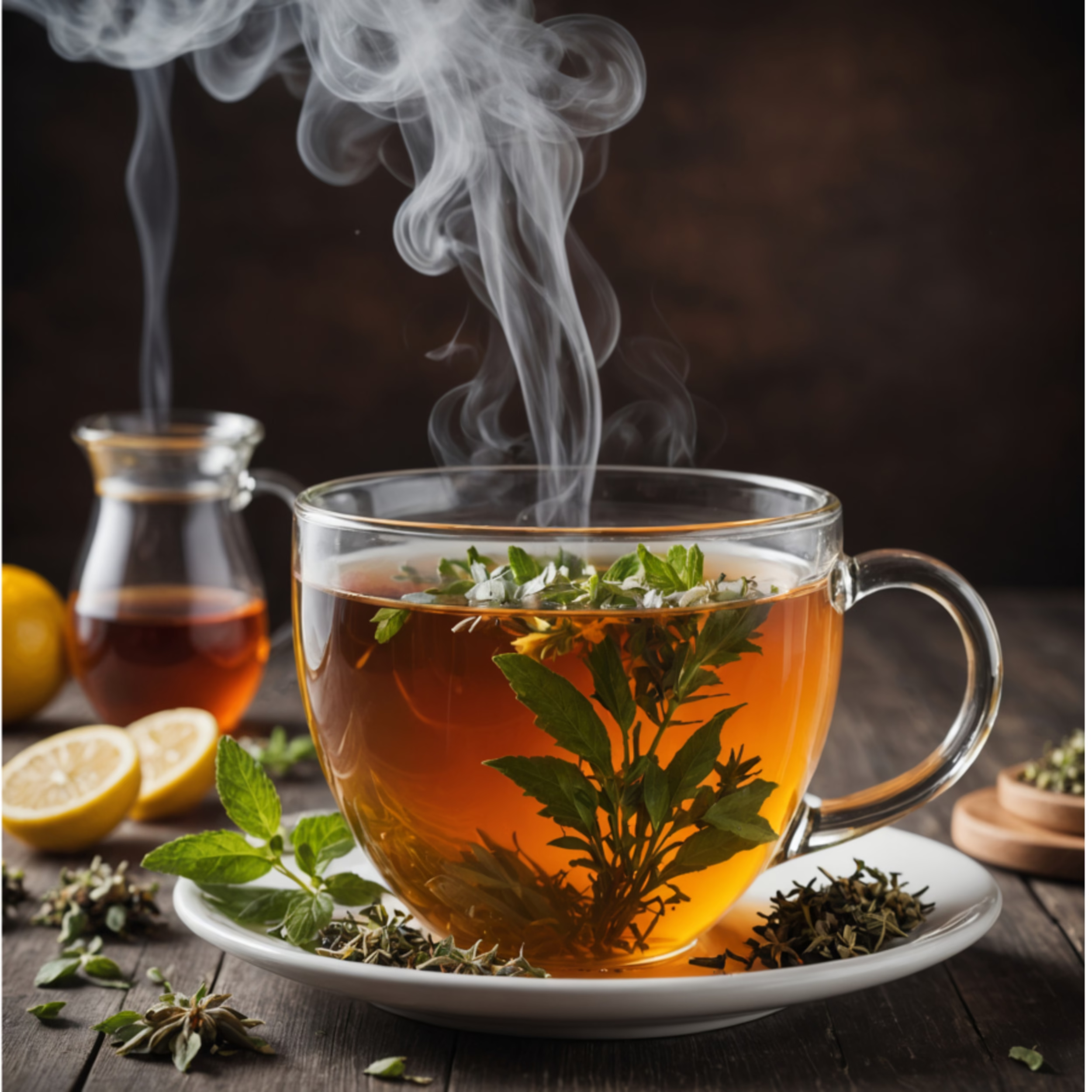
Herbal tea benefits have been used for centuries across cultures as a natural way to support health and wellbeing. Unlike traditional tea made from Camellia sinensis (black, green, white, oolong), herbal tea is technically an infusion – made from dried flowers, leaves, roots, bark, seeds, or fruits.
People drink herbal teas for relaxation, digestion, immune support, circulation, sleep, and general wellbeing. But what actually works? Which claims for herbal tea benefits are supported by research? And are herbal teas safe for daily use?
This guide examines the evidence behind herbal tea benefits, the limits of those benefits, and how to choose high-quality infusions responsibly.
Explore Herbal Tea Benefits by Topic
If you are looking for specific outcomes, start here:
01] Anxiety & Stress → Herbal Teas for Anxiety and Stress Relief
02] Digestion → Herbal Teas to Aid Digestion
03] Heart & Blood Pressure → Herbal Teas for Cardiovascular Support
04] Inflammation → Herbal Teas for Inflammation
05] Safety → Are Herbal Teas Safe?
06] Sleep → Herbal Teas for Sleep
07] Weight Loss → Herbal Teas for Weight Loss
08] Health & Beauty → Herbal Teas for Health and Beauty
09] Immunity & Infections → Herbal Teas for Immunity and Infections
10] Female Wellness → Herbal Teas for Female Wellness
11] Male Wellness → Herbal Teas for Male Wellness
12] Herbal Tea Articles
13] Herbal Teas Index
14] Herbal Tea Shop
“If you’d like to try the teas mentioned in this article, we’ve curated a selection of high-quality, tested sources below. Every product we recommend has been chosen for purity and potency, or visit our online Herbal Tea Shop for even more choice”.
Looking for a specific herbal tea? Browse the full A–Z list here:
Herbal Teas A-Z List
Get the Free Herbal Tea Shop Cheat Sheet
What Herbal Tea Is – and What It Isn’t
Herbal tea is not “tea” in the strict botanical sense. It contains no tea leaf unless specifically blended with black, green, oolong, or white tea.
It may contain:
- Flowers (chamomile, hibiscus, marigold)
- Leaves (peppermint, lemon balm, nettle)
- Roots (ashwagandha, ginger, valerian)
- Berries (hawthorn, rosehip)
- Seeds (anise, dill, fennel)
Because herbal teas do not contain caffeine unless added, they are often used as evening beverages or as alternatives to coffee and traditional tea.
However, “natural” does not automatically mean safe or effective. Herbal tea benefits and their effects depend on the herb, dosage, preparation, and the individual drinking it.
If you are unsure how herbal tea differs from traditional tea, see our full guide to Herbal Tea vs True Tea (Camellia sinensis explained properly).
Major Herbal Tea Benefits (Evidence-Based Overview)
Herbal Tea for Sleep
Some of the strongest research support concerning herbal tea benefits relates to sleep, especially chamomile, valerian root, and lemon balm.
Herbal tea for sleep is best viewed as a gentle behavioural support – part of a night-time routine rather than a pharmaceutical intervention.
For a complete guide to herbal teas for sleep, including best herbs, evidence, and how to use them:
Herbal Tea for Anxiety and Stress
Certain herbs have traditionally been used to calm the nervous system, especially lemon balm, passionflower, chamomile and peppermint.
Important distinction:
Herbal tea may support stress management, but it does not replace therapy or treatment for clinical anxiety disorders.
For a complete guide to herbal teas for sleep, including best herbs, evidence, and how to use them:
Herbal Tea for Digestion
This is one of the most established herbal tea benefits, and the names that spring to mind are: peppermint, ginger, fennel and dandelion root teas.
For a complete guide to herbal teas for sleep, including best herbs, evidence, and how to use them:
Herbal Tea for Heart Health
Cardiovascular herbal tea benefits claims are common – some justified, others overstated. Hawthorn Berry and Hibiscus are the big two.
These herbs provide potential herbal tea benefits, and are supportive, not substitutes for cardiology.
For a complete guide to herbal teas for sleep, including best herbs, evidence, and how to use them:
Herbal Tea for Inflammation and Antioxidants
Many herbal teas contain polyphenols and flavonoids.
Antioxidant activity measured in laboratories does not always translate into clinical outcomes. However, diets rich in plant polyphenols are generally associated with improved long-term health markers. Herbal tea may contribute modestly to total dietary antioxidant intake.
For a complete guide to herbal teas for sleep, including best herbs, evidence, and how to use them:
What Herbal Tea Cannot Do
It cannot:
- Cure chronic disease
- Replace prescription medication
- Detoxify the liver in a medical sense
- Reverse ageing
Claims that herbal tea “flushes toxins” or “melts fat” are marketing exaggerations, they are not proven herbal tea benefits.
Weight loss associated with herbal tea is typically due to:
- Replacing caloric drinks
- Mild diuretic effects
- Appetite regulation through ritual
Not metabolic transformation.
Is Herbal Tea Safe to Drink Daily?
For most healthy adults, many herbal teas are safe in moderate amounts.
However, safety depends on:
- The specific herb
- Dosage
- Duration
- Medical conditions
- Medication interactions
To understand what happens physiologically after drinking an infusion, read:
How Herbal Tea Affects the Body.
Important considerations:
- Warfarin and anticoagulants: Certain herbs (including high vitamin K herbs) may interfere with clotting balance.
- Pregnancy: Some herbs are contraindicated.
- Blood pressure medication: Hibiscus may enhance hypotensive effects.
- Sedatives: Combining calming herbs with medications can increase drowsiness.
If you take medication or have a chronic condition, consult a qualified healthcare professional before attempting to benefit from herbal tea benefits in regular, daily use.
Quality Matters: How to Choose Good Herbal Tea
Poor-quality herbs can undermine both safety and herbal tea benefits.
Look for:
- Clearly labelled botanical names
- Country of origin
- Organic certification where appropriate
- Loose leaf rather than dust-filled bags
- No artificial flavouring unless disclosed
Whole dried herbs retain more volatile oils than finely ground powder exposed to air.
Storage matters:
Keep herbs sealed, dry, and away from light.
Loose Leaf vs Tea Bags
Loose leaf typically offers:
- Better flavour
- Higher visible quality
- Greater flexibility in blending
- more clearly measurable herbal tea benefits
Tea bags offer:
- Convenience
- Consistent dosing
- Portability
If therapeutic intent is the goal, loose leaf usually provides superior control and transparency.
Loose Leaf vs Tea Bags: Which Is Better for Health and Flavour?
Herbal Tea and Daily Ritual
The physiological effects of herbs are only part of the picture.
Ritual itself has measurable impact:
- Slowed breathing
- Parasympathetic activation
- Reduced screen exposure
- Structured pause in the day
Herbal tea benefits may be partly botanical and partly behavioural.
This distinction matters – because it reframes herbal tea as a lifestyle tool rather than a miracle substance.
Common Myths About Herbal Tea
Myth 1: If it’s natural, it’s safe.
False. Natural compounds can be pharmacologically active.
Myth 2: Stronger taste means stronger effect.
Not necessarily. Potency depends on chemical concentration, not bitterness.
Myth 3: More is better.
Excessive daily intake of certain herbs can create problems.
Myth 4: All detox teas are healthy.
Many “detox” teas rely on stimulant laxatives. That is not detoxification — it is forced bowel movement.
Building a Personal Herbal Tea Practice
If you are new to herbal tea:
- Start with single-ingredient infusions.
- Observe how your body responds – keep notes, if possible.
- Use moderate quantities.
- Avoid mixing multiple new herbs simultaneously.
- Introduce one new tea at a time.
Consistency matters more than complexity.
Frequently Asked Questions
How long does herbal tea take to work?
Mild digestive effects may be noticed within hours. Sleep and stress support often require consistent use over days or weeks, as some herbal tea benefits are subtle.
Can herbal tea replace coffee?
Yes, if caffeine avoidance is the goal. However, it will not provide the same stimulant effect.
Can herbal tea replace medication?
No. Herbal tea may support general wellbeing but should not substitute prescribed treatment without medical supervision.
Can herbal tea help with the menopause?
Yes, there are issues brought on by the menopause that herbal teas can allieviate.
The Bottom Line
Herbal tea offers modest, evidence-supported benefits in specific areas:
- Mild sleep support
- Stress reduction
- Digestive comfort
- Blood pressure support (hibiscus)
- Gentle circulatory support (hawthorn)
Herbal tea benefits do not usually include cures for diseases. They do not function as a pharmaceutical substitute. Their effects are supportive, not transformative.
Used responsibly, herbal tea can be a sustainable daily practice that contributes to long-term wellbeing.
Special Notice
Tea, Reflection, and Reading
Many people combine herbal tea with quiet reading, journalling, or reflective time.
If you enjoy thoughtful fiction rooted in psychology, spirituality, and moral tension, you may wish to explore the novels available in our bookshop. A warm infusion and a reflective story often complement each other well.
Tea can be nourishment.
Reading can be perspective.
Combined, they create space.
Visit our bookshop to check out the ‘culturally grounded, Otherworldly narratives’ by Owen Jones.
Recommended Basic Equipment
Manuka Honey: https://amzn.to/47p7i9g
Tea infuser: https://amzn.to/4lAToGE
Glass teapot: https://amzn.to/4snGsGY
High-quality Garlic press: https://amzn.to/4sFBsxD
Storage boxes: https://amzn.to/47UQgQf
Assortment Box: https://amzn.to/3NFO9ZJ
Visit our online Herbal Tea Shop for more choice!
Do you read novels? Visit our bookshop to check out the ‘culturally grounded, Otherworldly narratives’ by Owen Jones.
Core Guides
01] Herbal Teas for Anxiety and Stress Relief
02] Herbal Teas for Digestion
03] Herbal Teas for Cardiovascular Support
04] Herbal Teas for Inflammation
05] Are Herbal Teas Safe?
06] Herbal Teas for Sleep
07] Herbal Tea for Weight Loss
08] Herbal Teas for Health and Beauty
09] Herbal Teas for Immunity and Infections
10] Herbal Teas for Female Wellness
11] Herbal Teas for Male Wellness
12] Herbal Tea Articles
13] Herbal Teas Index
13] Herbal Tea Shop
Looking for a specific herbal tea? Browse the full A–Z list here:
Herbal Teas A-Z List
Get the Free Herbal Tea Shop Cheat Sheet