


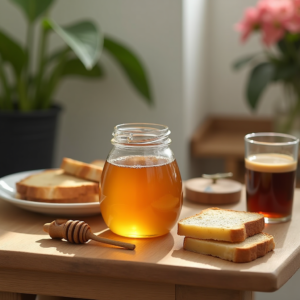
What manuka honey is and how it works
Manuka honey is produced by bees that forage primarily on the flowers of the manuka bush (Leptospermum scoparium), a shrub native to New Zealand and southeastern Australia. It has been used medicinally by the indigenous Maori people of New Zealand for centuries, and since the 1980s has been the subject of intensive scientific research that has confirmed and extended much of that traditional knowledge.
What makes manuka honey different from ordinary honey is its unusually high concentration of methylglyoxal (MGO) – a compound formed from dihydroxyacetone (DHA), which is found in high quantities in manuka flower nectar. MGO is the primary driver of manuka honey’s potent and stable antimicrobial activity. Ordinary honeys contain some MGO, but at concentrations too low to be clinically significant. Manuka honey contains MGO at levels many times higher – and unlike the hydrogen peroxide-based antimicrobial activity of most honeys, which is destroyed by heat, light, and bodily fluids, MGO-based activity is stable.
Manuka honey is graded using two main systems. The UMF (Unique Manuka Factor) rating, developed in New Zealand, reflects the overall bioactive profile of the honey and is the most internationally recognised standard. A UMF of 10+ is considered the minimum for therapeutic use; UMF 15+ and above is used for more intensive applications. The MGO rating system measures methylglyoxal content directly – MGO 263+ broadly corresponds to UMF 10+, and MGO 514+ to UMF 15+. When buying manuka honey for health purposes, always look for one of these certified ratings on the label.
Beyond MGO, manuka contains a range of other bioactive compounds including leptosperin, DHA, hydrogen peroxide, and a complex array of polyphenols and flavonoids that contribute antioxidant and anti-inflammatory activity. It also contains small amounts of vitamins B2, B3, B5, B6, and C, along with minerals including calcium, copper, iron, magnesium, potassium, sodium, and zinc.
“If you’d like to try manuka for yourself, we’ve curated a selection of high-quality, tested sources below. Every product we recommend has been chosen for purity and potency, or visit our online Herbal Tea Shop for even more choice”.
Looking for a specific herbal tea? Browse the full A–Z list here:
Herbal Teas A-Z List
Get the Free Herbal Tea Shop Cheat Sheet
Key health benefits
Antimicrobial and antibacterial activity Manuka honey’s most well-documented and clinically significant property is its broad-spectrum antimicrobial activity. It has been shown in laboratory and clinical studies to be effective against a wide range of bacteria, including Staphylococcus aureus (including MRSA), Streptococcus, Helicobacter pylori, Escherichia coli, and Pseudomonas aeruginosa. This activity is largely attributed to MGO, but research suggests that the full bioactive profile of manuka honey acts synergistically, making it considerably more effective than MGO alone. Manuka honey-based wound dressings are licensed medical devices in several countries, including the UK and US, and are used clinically for chronic wounds, burns, and surgical site infections.
Wound healing and skin repair Manuka honey’s wound-healing properties extend beyond its antimicrobial activity. It creates a moist healing environment, has a low pH that inhibits bacterial growth, and its osmotic action draws fluid from infected tissue, reducing swelling and promoting the formation of new tissue. Clinical trials have demonstrated its effectiveness in accelerating the healing of diabetic foot ulcers, pressure sores, and post-surgical wounds. For everyday use, a small amount of high-grade manuka honey applied to minor cuts, burns, or skin irritations can support healing and reduce the risk of infection.
Digestive and gut health Manuka has a well-established reputation for supporting digestive health. Its activity against Helicobacter pylori – the bacterium implicated in gastric ulcers and chronic gastritis – has been demonstrated in several studies, and it has been used as a complementary approach alongside conventional treatment for H. pylori infection. It may also help to soothe the symptoms of acid reflux and gastro-oesophageal reflux disease (GORD) by coating the oesophageal lining. Its prebiotic properties – supporting the growth of beneficial gut bacteria including Lactobacillus and Bifidobacterium – make it a useful addition to a gut health routine.
Sore throat and oral health Manuka honey is one of the most effective natural remedies for sore throats, and its use is consistent with a growing body of evidence. Its antimicrobial, anti-inflammatory, and soothing properties combine to reduce the pain, swelling, and bacterial load associated with pharyngitis and tonsillitis. Taking a teaspoon of manuka honey directly, or stirring it into a warm herbal tea, is a well-supported approach to throat discomfort. Interestingly, manuka honey also demonstrates significant antibacterial activity against the oral pathogens responsible for plaque, gingivitis, and tooth decay – despite being a sugar-containing product.
Immune support Manuka stimulates the production of cytokines – signalling proteins that play a central role in the immune response – and has been shown to activate monocytes, a type of white blood cell involved in fighting infection. Its antioxidant content helps to reduce oxidative stress, which can impair immune function when chronic. Regular small doses of manuka honey may support immune resilience, particularly during winter months or periods of increased susceptibility to infection.
Anti-inflammatory effects The polyphenols and flavonoids in manuka inhibit the production of pro-inflammatory cytokines and reduce markers of systemic inflammation. This anti-inflammatory activity is relevant to a wide range of conditions, from inflammatory bowel disease to joint pain, and complements the anti-inflammatory properties of many of the herbal teas with which manuka honey is commonly paired.
Sleep support A lesser-known but well-supported use of manuka honey is as a sleep aid. A small amount taken before bed – a teaspoon stirred into warm water or herbal tea – is thought to support the gradual release of glycogen by the liver during sleep, reducing the likelihood of the stress hormone cortisol being released in the night as blood sugar drops. This mechanism, proposed by pharmacist and nutritionist Mike McInnes, is consistent with the traditional practice of taking warm honey drinks before bed in many cultures.
How to use
Manuka honey is versatile and can be incorporated into a daily wellness routine in several straightforward ways.
As a sweetener for herbal tea: The most natural use in this context. A teaspoon stirred into a warm – not boiling – cup of herbal tea adds sweetness and extends the health benefits of the drink. Importantly, manuka should not be added to boiling water or heated above approximately 40°C, as high temperatures degrade the MGO and reduce its antimicrobial activity. Allow the tea to cool slightly before adding the honey.
Taken directly by the spoon: For sore throats, digestive complaints, or general immune support, taking half to one teaspoon of manuka honey directly – allowing it to coat the throat before swallowing – is the most effective delivery method for these purposes.
On toast or bread: A simple and pleasant daily habit. Use in place of ordinary honey or jam for a functional upgrade to breakfast.
Applied topically: For minor wounds, burns, or skin irritations, a small amount of high-grade manuka honey (UMF 15+ or MGO 514+) applied directly to the affected area and covered with a clean dressing can support healing and prevent infection.
In warm water with lemon: A classic combination. The antimicrobial and soothing properties of manuka honey complement the vitamin C and acidity of lemon in a simple, effective morning or evening drink.
Blending suggestions: Manuka honey pairs naturally with ginger tea for a warming anti-inflammatory combination, with chamomile for a calming sleep-supportive evening drink, and with thyme tea for a particularly effective sore throat remedy. It also works beautifully with lemon balm, peppermint, and cinnamon tea.
“If you’d like to try manuka honey for yourself, we’ve curated a selection of high-quality, tested sources below. Every product we recommend has been chosen for purity and potency, or visit our online Herbal Tea Shop for even more choice”.
How to use safely
Manuka is safe for most healthy adults when consumed in moderate quantities as a food. Several considerations apply.
Diabetes: Manuka honey is a sugar-containing food and will raise blood glucose levels. Those managing diabetes or prediabetes should account for manuka honey in their carbohydrate intake and monitor blood sugar accordingly. The glycaemic impact of manuka honey is lower than that of refined sugar or ordinary honey, but it is not negligible.
Infants under 12 months: Honey of any kind – including manuka – must never be given to infants under 12 months of age due to the risk of infant botulism. Bacterial spores that are harmless to adults can germinate in an infant’s immature digestive system with potentially fatal consequences. This is an absolute contraindication.
Allergies: Those with known allergies to bees or bee products should exercise caution with manuka honey. Allergic reactions, including anaphylaxis, have been reported, though they are rare.
Dental health: Despite its antibacterial properties against oral pathogens, manuka is still a sugar and can contribute to tooth decay if consumed frequently without adequate dental hygiene. Rinse or brush teeth after consuming manuka honey, particularly if taken at bedtime.
Medication interactions: Manuka honey may interact with some chemotherapy drugs, including cyclophosphamide and 5-fluorouracil, potentially affecting their activity. Those undergoing cancer treatment should seek medical advice before using manuka honey therapeutically.
Temperature sensitivity: As noted above, high temperatures destroy MGO activity. Never add manuka honey to boiling liquid or cook with it if the therapeutic properties are the goal.
Recommended dosage
For general wellness and immune support, one to two teaspoons per day is the most commonly cited dose. This is sufficient to deliver a meaningful amount of MGO and bioactive compounds without excessive sugar intake.
For sore throat or digestive complaints, one teaspoon taken directly up to three times daily is a reasonable therapeutic approach.
For wound care, apply a sufficient quantity to cover the wound surface comfortably under a dressing; clinical wound dressings are pre-impregnated with manuka honey for convenience.
UMF and MGO grade guidance:
- UMF 5-9 (MGO 83-262): suitable as a general food-grade honey and everyday sweetener.
- UMF 10-14 (MGO 263-513): suitable for general health maintenance and mild therapeutic use.
- UMF 15-24 (MGO 514-829): suitable for more intensive therapeutic use – sore throats, digestive complaints, wound care.
- UMF 25+ (MGO 830+): the highest grade available; used for serious wound care and intensive antimicrobial applications.
Limitations
Manuka honey has a stronger and more varied evidence base than almost any other natural health product – but several important limitations apply.
Much of the clinical evidence for manuka honey’s benefits relates to wound care, where it is used as a licensed medical device in concentrated form. The concentrations delivered therapeutically in wound dressings are considerably higher than those achievable through dietary consumption.
The evidence for internal health benefits – digestive health, immune support, sore throat relief – is generally of lower quality than the wound care evidence, relying more heavily on in vitro studies, animal models, and small clinical trials. These applications are biologically plausible and consistent with traditional use, but should be regarded as supportive rather than conclusive.
The manuka honey market has significant problems with fraud and mislabelling. More manuka honey is sold globally each year than New Zealand produces, which means a substantial proportion of products sold as manuka honey are adulterated, mislabelled, or of significantly lower grade than claimed. Always buy from reputable suppliers with certified UMF or MGO ratings verified by independent testing.
Manuka honey is considerably more expensive than ordinary honey, and the price increases steeply with UMF grade. For everyday use as a tea sweetener, a lower UMF grade is perfectly adequate – reserving higher grades for therapeutic applications represents a sensible and economical approach.
FAQ
What makes manuka honey different from ordinary honey?
The key difference is the concentration of methylglyoxal (MGO), which gives manuka honey its uniquely potent and stable antimicrobial activity. Ordinary honey has some antimicrobial properties, mainly from hydrogen peroxide, but these are much weaker and destroyed by heat and light. Manuka honey’s MGO-based activity is stable and significantly more powerful.
What UMF or MGO grade should I buy?
For everyday use as a tea sweetener or general health food, UMF 10+ (MGO 263+) is a good starting point. For sore throats, digestive complaints, or wound care, UMF 15+ (MGO 514+) is more appropriate. Higher grades are more expensive and are best reserved for specific therapeutic purposes.
Can I cook with manuka honey?
You can cook with it as a food ingredient, but heating above approximately 40°C destroys the MGO and the antimicrobial activity. If the health benefits are your reason for using it, cooking defeats the purpose. Use it in dressings, stir it into warm (not hot) drinks, or take it directly.
Is manuka honey worth the price?
For a general everyday sweetener, ordinary honey is perfectly adequate and much cheaper. Manuka honey earns its premium when used for specific therapeutic purposes – wound care, sore throat relief, digestive support, or immune supplementation – where its unique bioactive profile delivers genuine benefits that ordinary honey cannot match.
How do I know if my manuka honey is genuine?
Look for certified UMF or MGO ratings from independent testing bodies, and buy from reputable suppliers. The UMF Honey Association in New Zealand licenses the UMF trademark and maintains a register of certified producers. Cheap manuka honey – particularly from unknown sources – is very likely to be adulterated or mislabelled.
Conclusion
Manuka honey occupies a unique position at the intersection of traditional food, modern functional nutrition, and evidence-based medicine. Its wound-healing credentials are among the best-documented of any natural product; its digestive, immune, and antimicrobial benefits are well supported by a growing body of research; and its everyday use as a sweetener for herbal tea adds a genuine therapeutic dimension to an already healthy habit. It is not a medicine, and it is not a miracle – but it is, by some distance, the most bioactively remarkable honey on the planet, and one of the most useful natural health products available without a prescription. Buy certified, store correctly, use consistently, and do not overheat it.
“Explore our full range of wellness products in the Herbal Tea Shop – quality teas, infusers, and more”.
Recommended Products
“If you’d like to try manuka honey for yourself, we’ve curated a selection of high-quality, tested sources below. Every product we recommend has been chosen for purity and potency, or visit our online Herbal Tea Shop for even more choice”.
👉 Best to try first: Manuka Honey – certified manuka honey with a verified UMF or MGO rating is the only way to be sure you are getting the genuine article and the full therapeutic benefit.
Start here: Manuka Honey
Ginger tea (loose leaf)
Chamomile tea (loose leaf)
Thyme tea (loose leaf)
Peppermint tea (loose leaf)
Cinnamon tea (loose leaf)
Tea Infuser
Glass Teapot
Garlic Press Kit
Storage Boxes
Assortment Box
Visit our online Herbal Tea Shop for more choice!
Do you read novels? Visit our bookshop to check out the ‘culturally grounded, Otherworldly narratives’ by Owen Jones.
Further Reading
For a full evidence-based overview of herbal tea benefits, safety, and quality considerations, read our complete guide to Herbal Tea Benefits.
1] Herbal Teas for Immunity and Infections – a broader guide to the herbal teas most useful for supporting immune function and fighting infection, many of which work synergistically with manuka honey.
2] Herbal Teas for Digestion – manuka honey’s well-documented benefits for gut health and H. pylori sit naturally alongside this guide to the herbs most useful for digestive complaints.
3] Herbal Teas for Inflammation – manuka honey’s anti-inflammatory polyphenol profile complements the herbs covered here, and the two are often used together.
4] Are Herbal Teas Safe? – a practical guide to safety, interactions, and quality considerations for anyone building a herbal wellness routine that includes manuka honey.
5] Herbal Teas for Health and Beauty – manuka honey’s skin-supporting and anti-inflammatory properties make it a natural companion to the herbs covered in this guide.
References
1] Manuka honey – antimicrobial properties and wound healing – National Library of Medicine – comprehensive review of the evidence for manuka honey’s antimicrobial activity and clinical wound care applications.
2] Methylglyoxal as the active antimicrobial agent in manuka honey – National Library of Medicine – the landmark study identifying MGO as the primary driver of manuka honey’s unique antimicrobial activity.
3] Manuka honey and Helicobacter pylori – National Library of Medicine – study on manuka honey’s in vitro activity against H. pylori at concentrations achievable through dietary consumption.
4] UMF grading and authentication of manuka honey – UMF Honey Association New Zealand – the official body responsible for licensing and verifying UMF-rated manuka honey products.
5] Honey in wound care – Cochrane Database of Systematic Reviews – systematic review of the clinical evidence for honey-based wound dressings, including manuka honey formulations.
6] Manuka honey – general safety and food standards – Food Standards Australia New Zealand – regulatory guidance on manuka honey labelling, grading standards, and food safety considerations.