


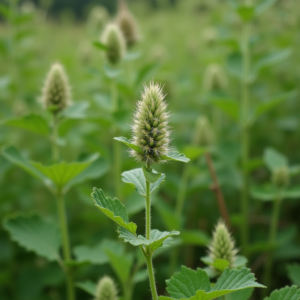
The old-fashioned herb for stubborn coughs and chest congestion
Horehound tea, made from the leaves and flowering tops of the Marrubium vulgare plant, is a traditional European remedy for coughs, colds, and chest congestion. Its name comes from the Old English “har hun,” meaning “downy plant,” referring to the white, woolly hairs that cover its leaves. For centuries, horehound was a staple in every herbalist’s cabinet, used to make cough drops, syrups, and teas for wet, rattling coughs that would not shift. The active compound, marrubiin, is a potent expectorant that helps loosen and expel mucus from the lungs. Unlike many modern cough suppressants that simply stop the cough reflex, horehound helps you cough productively – getting the phlegm out. The tea is intensely bitter. But for those suffering from a stubborn, chesty cough that will not budge, it is worth the taste.
“If you’d like to try the herbal teas mentioned in this article for yourself, we’ve curated a selection of high-quality, tested sources below. Every product we recommend has been chosen for purity and potency, or visit our online Herbal Tea Shop for even more choice”.
Looking for a specific herbal tea? Browse the full A–Z list here:
Herbal Teas A-Z List
Get the Free Herbal Tea Shop Cheat Sheet
What horehound tea is and how it works
Horehound (Marrubium vulgare) is a perennial plant in the mint family (Lamiaceae), native to Europe, North Africa, and Asia, but now naturalised throughout North America. It grows in dry, disturbed soils – roadsides, wastelands, and rocky fields. The plant produces small white flowers in whorls and grey-green leaves covered in fine, woolly hairs.
The primary active compound in horehound is marrubiin, a bitter diterpene lactone. Marrubiin acts as an expectorant, thinning mucus and making it easier to cough up . This is why horehound has been used for centuries for wet, productive coughs, bronchitis, and chest congestion .
Horehound also contains marrubenol, marrubic acid, flavonoids (including quercetin and luteolin), tannins, and volatile oils . These compounds work through several mechanisms:
- Expectorant action – loosens and thins mucus in the lungs
- Antispasmodic properties – relaxes bronchial muscles, reducing coughing fits
- Anti-inflammatory effects – soothes irritated airways
- Antimicrobial activity – fights certain bacteria and fungi
- Bitter tonic action – stimulates digestive secretions
Unlike many herbal teas that are gentle enough for daily sipping, horehound is potent and bitter. It is taken as medicine, not for pleasure.
Key health benefits of horehound tea
Cough relief is the primary reason people use horehound. It is specifically indicated for wet, productive coughs where mucus is trapped in the chest. Marrubiin helps thin the mucus, making it easier to cough up . Unlike suppressants that stop the cough reflex, horehound helps you cough productively.
Bronchitis and chest congestion respond well to horehound. Its expectorant and anti-inflammatory actions help clear the airways and reduce inflammation in the bronchial tubes . The European Medicines Agency supports the traditional use of horehound as an expectorant in catarrh for up to seven days .
Asthma may be helped by horehound’s antispasmodic properties. By relaxing bronchial muscles, it may help ease the wheezing and tightness associated with mild asthma. However, it is not a substitute for prescribed asthma medication.
Sore throat relief comes from horehound’s anti-inflammatory and mild antimicrobial properties. Horehound lozenges and candies have been used for generations to soothe sore, irritated throats .
Digestive support is a traditional use of horehound. As a bitter herb, it stimulates digestive secretions, helping with indigestion, bloating, and loss of appetite . The European Medicines Agency supports traditional use for dyspepsia symptoms such as bloating, flatulence, and temporary loss of appetite for up to two weeks .
Blood sugar support has been suggested by some research. A small clinical study found that horehound tea reduced blood glucose by 0.64% in people with type 2 diabetes over 21 days . However, more research is needed.
How to prepare horehound tea
Horehound tea is very bitter. Traditional preparation methods help manage this.
Basic tea: Use one to two teaspoons of dried horehound leaves per cup of water. Pour freshly boiled water over the herb and steep for 10 minutes. Longer steeping produces a stronger, more bitter infusion . Strain well.
Traditional cough syrup: Simmer a strong horehound tea (double strength) with honey to make a syrup. Take by the teaspoon as needed .
Flavour: Horehound tea has an intensely bitter, earthy, slightly minty flavour. It is not pleasant. Most people need honey to make it drinkable .
Blending: Horehound blends well with other respiratory herbs such as thyme, mullein, or liquorice root. A teaspoon of honey is essential.
Hard candy: Traditional horehound candy is made by reducing a strong tea to a concentrate, then boiling with sugar until it hardens .
How to use horehound tea safely
Horehound tea is generally safe for short-term use. However, several precautions apply.
Do not use long-term. The European Medicines Agency recommends using horehound for coughs for no more than seven days, and for digestive symptoms for no more than two weeks .
Pregnancy and breastfeeding: Horehound should be avoided during pregnancy as it may stimulate uterine contractions and has traditional use as an emmenagogue (to bring on menstruation) . Breastfeeding women should also avoid horehound.
Diabetes: Horehound may lower blood sugar. If you take diabetes medications, monitor your levels closely .
Blood pressure: Horehound may lower blood pressure. Those with low blood pressure or taking blood pressure medications should use with caution .
Blood thinners: Marrubiin has demonstrated anticoagulant and antiplatelet activity in laboratory studies. If you take warfarin, aspirin, or other blood thinners, consult your healthcare provider .
Heart conditions: There is concern that horehound may cause irregular heartbeat in people with heart problems. Avoid use if you have a heart condition .
Surgery: Horehound may affect blood sugar and blood pressure. Discontinue use at least two weeks before scheduled surgery .
Children: Horehound is traditionally used in children for coughs, but consult a healthcare provider before giving it to young children. The traditional horehound candy is a safer, more palatable option for children.
Large doses: Very large amounts of horehound can cause vomiting .
Recommended dosage
For coughs and chest congestion, one cup of horehound tea up to three times daily for no more than seven days is typical. For digestive symptoms, one cup up to three times daily for no more than two weeks. Because horehound is very bitter, many people prefer to take it as a syrup (made with honey) rather than as a plain tea.
Limitations of horehound tea
Horehound tea is not a substitute for medical treatment, particularly for severe bronchitis, pneumonia, asthma, or whooping cough. Its effects are mild and work best for wet, productive coughs that are not severe. Clinical evidence for horehound is limited; most of its traditional uses are supported by historical practice rather than large-scale clinical trials . Horehound is not for daily, long-term use. It is a short-term remedy for acute symptoms.
FAQ
Is horehound tea good for coughs?
Yes. Horehound is an expectorant that helps loosen and thin mucus, making it easier to cough up. It is specifically indicated for wet, productive coughs and chest congestion.
Does horehound tea taste good?
No. Horehound tea is intensely bitter. Most people need honey to make it drinkable. Traditional horehound candy is a more palatable alternative.
Is horehound tea safe during pregnancy?
No. Horehound should be avoided during pregnancy as it may stimulate uterine contractions and cause miscarriage.
Can I drink horehound tea every day?
No. Horehound is for short-term use only – up to seven days for coughs, up to two weeks for digestive symptoms. Do not use it daily for extended periods.
What is the difference between white horehound and black horehound?
White horehound (Marrubium vulgare) is the medicinal herb described here. Black horehound (Ballota nigra) is a different plant with a fetid scent and different properties. Black horehound is sometimes used as an adulterant of white horehound .
Conclusion
Horehound tea is a traditional European remedy for stubborn, wet coughs and chest congestion. Its expectorant properties help loosen and expel mucus, making it easier to cough productively. The intensely bitter flavour is not for everyone, but for those suffering from a chesty cough that will not shift, it is worth acquiring the taste. Horehound is for short-term use only – no more than seven days for coughs. It is not for pregnant women, people with heart conditions, or those on blood thinners. Used appropriately, horehound tea can be a powerful ally for respiratory health.
Recommended Products
If you’d like to try the above herbal teas for yourself, we’ve curated a selection of high-quality, tested sources below. Every product we recommend has been chosen for purity and potency, or visit our online Herbal Tea Shop for even more choice.
Horehound tea (loose leaf): https://amzn.to/4cKFu22
Horehound tea bags: https://amzn.to/4w2AEoi
Thyme tea (loose leaf): https://amzn.to/3O3BRL2 (for blending)
Mullein tea bags: https://amzn.to/4cqjbxk (for blending)
Manuka Honey: https://amzn.to/47p7i9g
High-quality Garlic press: https://amzn.to/4sFBsxD
Tea infuser: https://amzn.to/4lAToGE
Glass teapot: https://amzn.to/4snGsGY
Storage boxes: https://amzn.to/47UQgQf
Assortment Box: https://amzn.to/3NFO9ZJ
Visit our online Herbal Tea Shop for more choice!
Do you read novels? Visit our bookshop to check out the ‘culturally grounded, Otherworldly narratives’ by Owen Jones.
Looking for a specific herbal tea? Browse the full A–Z list here:
Herbal Teas A-Z List
Get the Free Herbal Tea Shop Cheat Sheet
Further Reading
For a full evidence-based overview of herbal tea benefits, safety, and quality considerations, read our complete guide to Herbal Tea Benefits
1] For more on respiratory health, see:
Respiratory Inflammation
2] For cough relief, see:
Thyme Tea
3] For sore throat relief, see:
Can Herbal Tea Help with a Sore Throat?
4] For safety guidance on herbal teas, see:
Are Herbal Teas Safe?
5] For potential interactions with medications, see:
Herbal Tea and Medication
References
1] Drugs.com – Horehound Uses, Benefits & Dosage
2] Dr. Christopher Hobbs – Horehound
3] National Institutes of Health (NIH) – Horehound research
4] WebMD – White Horehound
5] PlantaeDB – Marrubium vulgare
6] EBSCO Natural Health – Horehound
7] NIH – Evaluation of Marrubium vulgare Growing Wild in Tunisia