

The sweet herb that soothes and restores
Licorice root tea, made from the root of the Glycyrrhiza glabra plant, is one of the most widely used and versatile herbs in traditional medicine. Known as the “great harmoniser” in Traditional Chinese Medicine, licorice root is included in countless herbal formulas to enhance their effects and moderate their harshness. It has a long history of use in Ayurvedic, Greek, Roman, and Middle Eastern medicine. Licorice root is prized for its demulcent, anti-inflammatory, expectorant, and adrenal-supporting properties. It is particularly renowned for its ability to soothe sore throats, calm coughs, support digestive health, and help the body cope with stress. Unlike many herbal teas, licorice root is naturally sweet, making it a pleasant and accessible remedy. However, it is not without risks. Licorice root contains glycyrrhizin, a compound that can cause serious side effects when consumed in large amounts or for extended periods. For this reason, deglycyrrhizinated licorice (DGL) is often recommended for long-term use, while regular licorice root should be used with caution.
“If you’d like to try the herbal teas mentioned in this article for yourself, we’ve curated a selection of high-quality, tested sources below. Every product we recommend has been chosen for purity and potency, or visit our online Herbal Tea Shop for even more choice”.
Looking for a specific herbal tea? Browse the full A–Z list here:
Herbal Teas A-Z List
Get the Free Herbal Tea Shop Cheat Sheet
What licorice root tea is and how it works
Licorice (Glycyrrhiza glabra) is a perennial herb native to southern Europe, Asia, and the Middle East. The root has been used medicinally for over 4,000 years, with records of its use in ancient Egyptian, Greek, Chinese, and Indian medicine. The name “licorice” comes from the Old French licoresse, which derives from the Greek glykyrrhiza, meaning “sweet root.”
The primary active compounds in licorice root include glycyrrhizin (also called glycyrrhizic acid), flavonoids (such as liquiritin and isoliquiritin), triterpenoids, and coumarins. Glycyrrhizin is responsible for both the sweet taste (50 times sweeter than sugar) and many of the therapeutic effects, but also for the potential side effects. These compounds work through several mechanisms: demulcent action (coating and soothing irritated mucous membranes), anti-inflammatory effects (reducing inflammation throughout the body), expectorant properties (loosening and thinning mucus), adrenal support (helping the body cope with stress by modulating cortisol), antiviral and antimicrobial activity (fighting certain viruses and bacteria), and hepatoprotective effects (protecting the liver). When prepared as a tea, these compounds are extracted into the water, providing a gentle but effective remedy for multiple conditions.
Regular licorice root contains glycyrrhizin, which can cause potassium depletion, fluid retention, and high blood pressure when consumed in large amounts. Deglycyrrhizinated licorice (DGL) has the glycyrrhizin removed and is safe for long-term use, but it is less effective for conditions requiring glycyrrhizin’s specific actions (such as adrenal support).
Key health benefits of licorice root tea
Sore throat and cough relief is one of the most common uses of licorice root tea. The demulcent properties coat and soothe irritated throat tissues, providing immediate relief from pain and scratchiness. The expectorant action helps loosen mucus, making coughs more productive. Licorice also has mild antimicrobial properties that can help fight the underlying infection. For sore throats, licorice root tea can be drunk or used as a gargle.
Digestive support is another major benefit. Licorice root has anti-inflammatory and antispasmodic properties that can help soothe the digestive tract. It is used for gastritis, heartburn, peptic ulcers, and inflammatory bowel conditions. DGL (deglycyrrhizinated licorice) is particularly effective for ulcers and heartburn without the side effects of glycyrrhizin. Licorice root tea can help relieve indigestion, bloating, and stomach discomfort.
Adrenal support and stress management is a traditional use of licorice root. Glycyrrhizin helps the body maintain cortisol levels, making it useful for adrenal fatigue, chronic stress, and low energy. By slowing the breakdown of cortisol, licorice root helps the body cope with stress more effectively. It is often used in formulas for chronic fatigue and burnout. However, because of the side effects of glycyrrhizin, this use should be short-term and under professional guidance.
Respiratory conditions including bronchitis, asthma, and chest congestion can benefit from licorice root tea. Its expectorant and anti-inflammatory properties help loosen mucus, reduce airway inflammation, and calm coughing. It is often combined with other respiratory herbs such as thyme, mullein, or elecampane.
Hormonal support is a lesser-known benefit. Licorice root has mild estrogenic effects and has been used for menopausal symptoms, PMS, and hormonal imbalances. It may help reduce hot flushes and support adrenal function during hormonal transitions.
Liver protection has been demonstrated in some studies. Licorice root has hepatoprotective properties and is used in Traditional Chinese Medicine to “harmonise” other herbs and protect the liver from their potential toxicity.
Skin health can be supported internally and externally. Licorice root tea drunk internally may help with inflammatory skin conditions such as eczema and psoriasis. Cooled licorice root tea can also be applied topically as a compress for skin irritation.
How to prepare licorice root tea
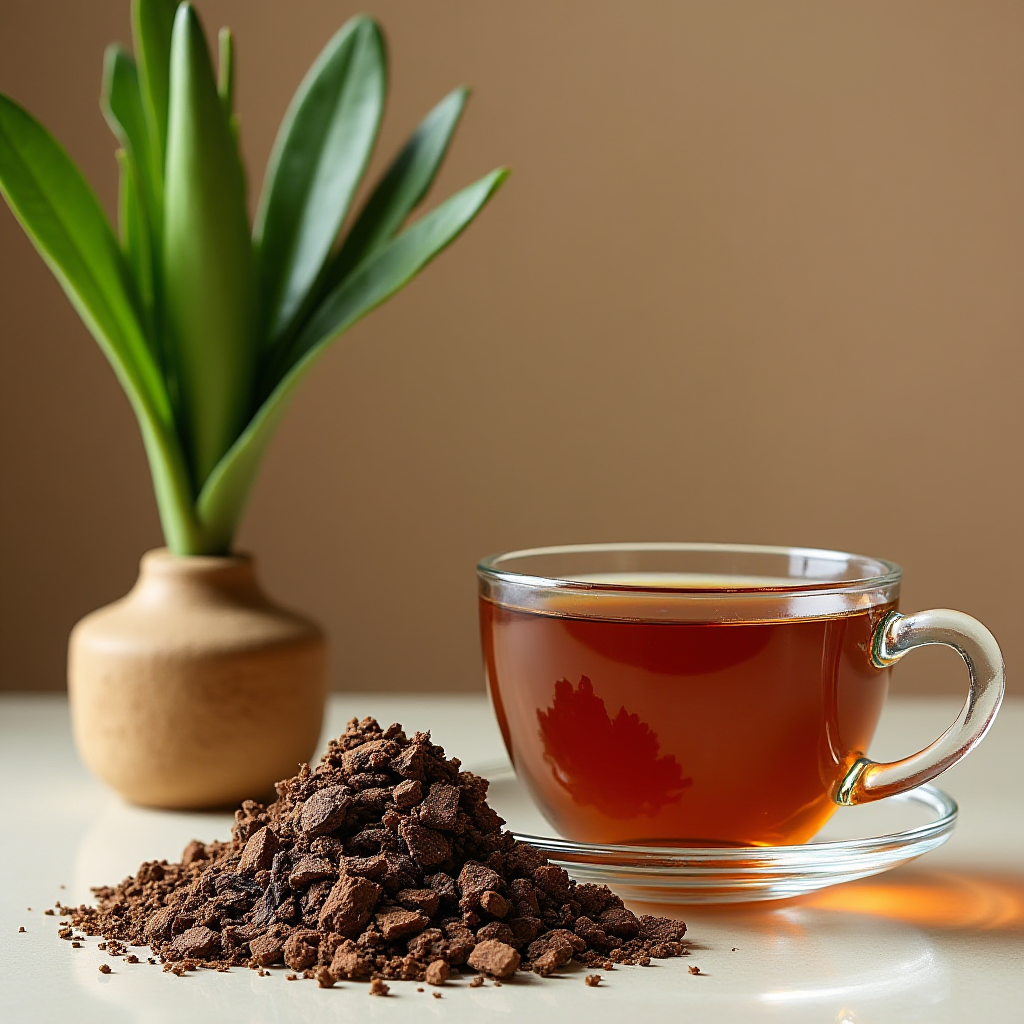
Licorice root tea can be prepared from dried root pieces or powder. From dried root pieces: Use one to two teaspoons of dried licorice root pieces per cup of water. Pour freshly boiled water over the root and steep for 5–10 minutes. Longer steeping produces a stronger, sweeter infusion. From powder: Use one-quarter to one-half teaspoon of licorice root powder per cup of water. Steep for 5–10 minutes, then strain through a fine mesh strainer or coffee filter to remove sediment. Decoction method: For stronger extraction, simmer licorice root pieces in water for 10–15 minutes. Flavour: Licorice root tea has a naturally sweet, earthy, slightly woody, and anise-like flavour. It is one of the few herbal teas that is pleasant without added sweeteners. Blending: Licorice root blends beautifully with other herbs, adding natural sweetness and enhancing their effects. It is often combined with peppermint, chamomile, ginger, or fennel. Sweetening: Additional sweetening is usually unnecessary due to licorice’s natural sweetness.
How to use licorice root tea safely
Licorice root tea is safe for most people when used short-term, but it carries significant precautions.
Do not use long-term. Regular licorice root (with glycyrrhizin) should not be used for more than two to four weeks continuously. Long-term use can cause serious side effects.
High blood pressure: Glycyrrhizin can raise blood pressure by causing fluid retention and potassium loss. Individuals with hypertension should avoid regular licorice root or use only DGL.
Kidney disease: Licorice root can worsen kidney problems and cause electrolyte imbalances. Those with kidney disease should avoid regular licorice root.
Low potassium (hypokalemia): Licorice root can deplete potassium levels, leading to muscle weakness, fatigue, heart arrhythmias, and other serious problems. Those with low potassium should avoid regular licorice root.
Heart conditions: Licorice root can affect heart rhythm and worsen congestive heart failure. Those with heart conditions should avoid regular licorice root.
Pregnancy and breastfeeding: Licorice root should be avoided during pregnancy as it may affect hormone levels and increase the risk of preterm labour. Breastfeeding women should also avoid licorice root.
Diabetes: Licorice root may affect blood sugar levels. Individuals with diabetes should monitor their blood sugar when using licorice root.
Medication interactions: Licorice root interacts with many medications, including diuretics, blood pressure medications, corticosteroids, blood thinners, and hormone therapies. Consult your healthcare provider.
Liver disease: While licorice root can protect the liver, those with severe liver disease should consult a healthcare provider before use.
Children: Licorice root tea should be used with caution in children and only in small amounts.
DGL (deglycyrrhizinated licorice): For long-term use (digestive health, ulcers), DGL is safe because the glycyrrhizin has been removed. DGL does not have the same risks as regular licorice root.
Recommended dosage
For acute conditions such as sore throat or cough, one to two cups of licorice root tea daily for up to two weeks is typical. Do not exceed two cups per day. Do not use for more than two to four weeks without a break. For long-term digestive support, DGL is recommended instead of regular licorice root.
Limitations of licorice root tea
Licorice root tea is not a substitute for medical treatment, particularly for hypertension, kidney disease, heart conditions, or severe respiratory infections. Its effects are moderate and work best as part of a broader approach. Claims that licorice root “cures” ulcers or adrenal fatigue are unsupported; it is best understood as a supportive tool for short-term use.
FAQ
Is licorice root tea good for a sore throat?
Yes. Licorice root tea has demulcent properties that coat and soothe sore throats. It also has mild antimicrobial and anti-inflammatory effects.
Is licorice root tea safe for high blood pressure?
No. Regular licorice root (with glycyrrhizin) can raise blood pressure and should be avoided by people with hypertension. DGL (deglycyrrhizinated licorice) is safe.
What does licorice root tea taste like?
Licorice root tea has a naturally sweet, earthy, slightly woody, and anise-like flavour. It is pleasant without added sweeteners.
Can I drink licorice root tea every day?
Regular licorice root tea should not be drunk daily for more than two to four weeks due to the risk of side effects. DGL can be used long-term.
Is licorice root tea safe during pregnancy?
No. Licorice root should be avoided during pregnancy as it may affect hormone levels and increase the risk of preterm labour.
Conclusion
Licorice root tea is a versatile, naturally sweet herbal remedy with a wide range of benefits. It soothes sore throats, calms coughs, supports digestion, and helps the body cope with stress. However, it is not without risks. The glycyrrhizin that gives licorice its therapeutic effects can also cause serious side effects – high blood pressure, low potassium, fluid retention – when consumed in large amounts or for extended periods. For short-term use (up to two weeks), regular licorice root tea is safe for most healthy adults. For long-term use, deglycyrrhizinated licorice (DGL) is the better choice. Used appropriately and with respect for its potency, licorice root tea is a valuable addition to the home medicine cabinet.
Recommended Products
“If you’d like to try the herbal teas mentioned in this article for yourself, we’ve curated a selection of high-quality, tested sources below. Every product we recommend has been chosen for purity and potency, or visit our online Herbal Tea Shop for even more choice”.
Licorice Root tea (loose leaf): https://amzn.to/4uV5Ntx
Licorice Root tea bags: https://amzn.to/4t7YA7L
Peppermint tea (loose leaf): https://amzn.to/4lIQSyi (for blending)
Chamomile tea (loose leaf): https://amzn.to/3Pv6zgo (for blending)
Manuka Honey: https://amzn.to/47p7i9g
High-quality Garlic press: https://amzn.to/4sFBsxD
Tea infuser: https://amzn.to/4lAToGE
Glass teapot: https://amzn.to/4snGsGY
Storage boxes: https://amzn.to/47UQgQf
Assortment Box: https://amzn.to/3NFO9ZJ
Visit our online Herbal Tea Shop for more choice!
Do you read novels? Visit our bookshop to check out the ‘culturally grounded, Otherworldly narratives’ by Owen Jones.
Looking for a specific herbal tea? Browse the full A–Z list here:
Herbal Teas A-Z List
Get the Free Herbal Tea Shop Cheat Sheet
Further Reading
For a full evidence-based overview of herbal tea benefits, safety, and quality considerations, read our complete guide to Herbal Tea Benefits
1] For more on respiratory health, see:
Respiratory Inflammation
2] For sore throat relief, see:
Can Herbal Tea Help with a Sore Throat?
3] For digestive health, see:
Herbal Teas to Aid Digestion
4] For safety guidance on herbal teas, see:
Are Herbal Teas Safe?
5] For potential interactions with medications, see:
Herbal Tea and Medication
Visit our bookshop to check out the ‘culturally grounded, Otherworldly narratives’ by Owen Jones.
References
1] National Center for Complementary and Integrative Health (NCCIH) – Licorice Root
Provides evidence-based information on licorice root safety and research.
2] European Medicines Agency – Licorice
Offers regulatory and safety assessments for licorice root preparations.
3] National Health Service (NHS) – Licorice and Blood Pressure
Provides medical guidance on licorice’s effects on blood pressure.
4] Cleveland Clinic – Licorice Root Tea Benefits and Risks
Provides practical recommendations for licorice root tea uses and safety.