

The traditional remedy for urinary health and rheumatism
Juniper berry tea, made from the dried berries of the Juniperus communis plant, is a traditional herbal remedy with a long history of use across Europe, Asia, and North America. Juniper berries are perhaps best known as the flavouring agent in gin, but their medicinal properties have been valued for centuries. The tea is particularly renowned for its ability to support urinary tract health, acting as a diuretic to flush out excess fluid and bacteria. It is also traditionally used for rheumatism, arthritis, and digestive complaints. Juniper berries contain volatile oils, flavonoids, and other compounds that give the tea its distinctive pine-like flavour and its therapeutic effects. Unlike many gentle herbal teas, juniper berry is potent and should be used with respect. It is not for everyone, and it should not be used long-term, but for specific conditions, it is a valuable addition to the herbal medicine cabinet.
“If you’d like to try the herbal teas mentioned in this article for yourself, we’ve curated a selection of high-quality, tested sources below. Every product we recommend has been chosen for purity and potency, or visit our online Herbal Tea Shop for even more choice”.
Looking for a specific herbal tea? Browse the full A–Z list here:
Herbal Teas A-Z List
Get the Free Herbal Tea Shop Cheat Sheet
What juniper berry tea is and how it works
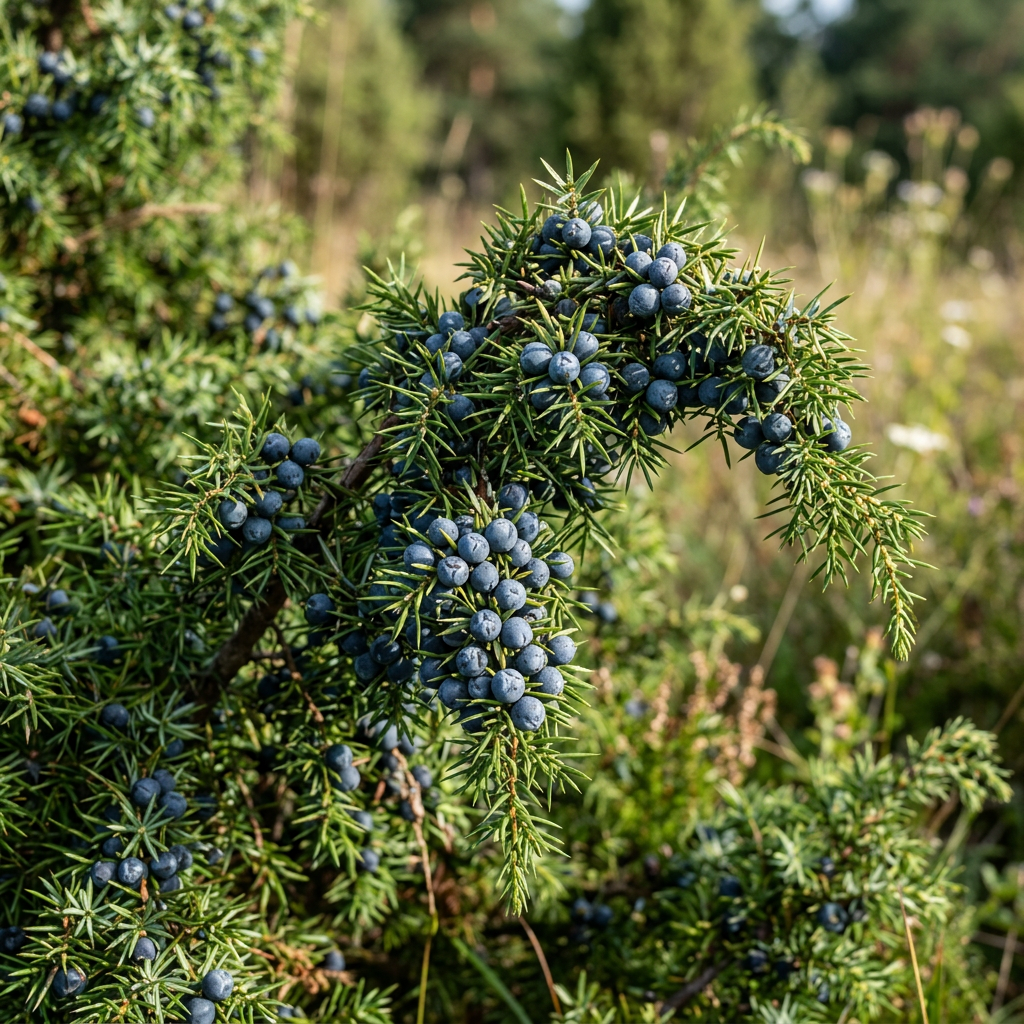
Juniper (Juniperus communis) is an evergreen shrub or small tree native to Europe, Asia, and North America. The plant produces small, blue-black berries that are actually cones, though they are commonly called berries. These berries take two to three years to mature and are harvested in the autumn. Juniper has been used medicinally since ancient times, with records of its use in ancient Egypt, Greece, and Rome.
The primary active compounds in juniper berries include volatile oils (such as alpha-pinene, beta-pinene, and limonene), flavonoids (such as rutin and quercetin), tannins, resins, and sugars. These compounds work through several mechanisms: diuretic effects (increasing urine production and flow), antimicrobial activity (inhibiting the growth of bacteria in the urinary tract), anti-inflammatory properties (reducing inflammation throughout the body), antioxidant effects (protecting cells from oxidative damage), and carminative properties (relieving gas and bloating). When prepared as a tea, these compounds are extracted into the water, providing a gentle but effective way to support urinary and musculoskeletal health.
Unlike many herbal teas that are safe for daily long-term use, juniper berry tea is considered a “cure” herb – used for specific conditions for short periods. It is potent and should not be consumed continuously for weeks or months.
Key health benefits of juniper berry tea
Urinary tract health is the most well-known benefit of juniper berry tea. The diuretic effect increases urine production, helping to flush bacteria out of the urinary tract. This makes it a traditional remedy for mild urinary tract infections (UTIs), cystitis, and bladder infections. Juniper also has antimicrobial properties that can help fight the bacteria causing the infection. However, juniper berry tea should not replace antibiotics for confirmed UTIs. It is best used as a supportive measure for mild symptoms or as a preventive.
Kidney and bladder support extends beyond infection. Juniper is used to support overall kidney function and to help prevent kidney stones. Its diuretic effect helps maintain urine flow, which can prevent the concentration of stone-forming minerals. It is also used for water retention (oedema) and bloating.
Rheumatism and arthritis relief is a traditional use of juniper berry tea. Its anti-inflammatory properties can help reduce pain and swelling in the muscles and joints. Juniper has been used for centuries for rheumatism, gout, and general musculoskeletal pain. It is often combined with other anti-inflammatory herbs such as devil’s claw or turmeric for enhanced effect.
Digestive support is another traditional use. Juniper’s carminative properties help relieve gas, bloating, and indigestion. It can also stimulate appetite. A cup of juniper berry tea after a heavy meal may help ease digestive discomfort.
Antioxidant protection helps protect cells from oxidative damage. The flavonoids in juniper berries, particularly rutin and quercetin, have antioxidant properties that support overall health and may reduce the risk of chronic diseases.
How to prepare juniper berry tea
Juniper berry tea can be prepared from whole or crushed dried berries. From whole berries: Use one to two teaspoons of dried juniper berries per cup of water. Gently crush the berries to release their active compounds. Pour freshly boiled water over the berries and steep for 10–15 minutes. Longer steeping produces a stronger, more medicinal infusion. Strain well: Strain the tea through a mesh strainer or tea infuser to remove the berries before drinking. Flavour: Juniper berry tea has a distinct, pine-like, slightly bitter, and resinous flavour. It is reminiscent of gin (since juniper is the primary flavouring agent). Some people enjoy the flavour; others find it medicinal. Blending: Juniper berry blends well with other herbs such as nettle, dandelion, or chamomile. A blend of juniper and nettle is traditional for rheumatism. Sweetening: Honey can help balance the bitterness.
How to use juniper berry tea safely
Juniper berry tea is potent and requires several important precautions.
Do not use long-term. Juniper berry tea should be used for short periods only – typically one to two weeks at a time. Prolonged use can irritate the kidneys and may lead to kidney damage.
Pregnancy and breastfeeding: Juniper should be avoided during pregnancy as it may stimulate uterine contractions and affect the menstrual cycle. It may also affect the developing foetus. Breastfeeding women should also avoid juniper due to limited safety data.
Kidney disease: Juniper is contraindicated for anyone with kidney disease, kidney infection, or kidney inflammation. Its diuretic effects can put additional strain on already compromised kidneys.
Diabetes: Juniper may lower blood sugar. Individuals with diabetes should monitor their blood sugar levels when using juniper and consult their healthcare provider.
Blood thinners: Juniper may interact with blood-thinning medications such as warfarin. Consult your healthcare provider before use.
Diuretics: Combining juniper with other diuretics (pharmaceutical or herbal) may increase the risk of dehydration and electrolyte imbalance.
Heart conditions: Juniper may affect blood pressure. Those with heart conditions should consult a healthcare provider before use.
Children: Juniper berry tea is generally not recommended for young children due to its potency.
Allergies: Individuals allergic to juniper pollen or other plants in the Cupressaceae family should avoid juniper.
Recommended dosage
For urinary tract support or rheumatism, one cup of juniper berry tea daily for up to two weeks is typical. Do not exceed two cups per day. Do not use for more than two weeks without a break. Effects are typically noticed within days.
Limitations of juniper berry tea
Juniper berry tea is not a substitute for medical treatment, particularly for confirmed urinary tract infections, kidney disease, or severe arthritis. Its effects are mild to moderate and work best as part of a broader approach that includes appropriate medical care. Claims that juniper “cures” UTIs or rheumatism are unsupported; it is best understood as a supportive tool for specific conditions, used for short periods.
FAQ
Is juniper berry tea good for urinary tract infections?
Juniper berry tea has diuretic and antimicrobial properties that may help flush bacteria from the urinary tract. It can be used for mild symptoms or as a preventive, but it should not replace antibiotics for confirmed UTIs.
What does juniper berry tea taste like?
Juniper berry tea has a distinct, pine-like, slightly bitter, and resinous flavour, similar to gin. Some people enjoy it; others find it medicinal.
Is juniper berry tea safe for kidneys?
Juniper should not be used by people with kidney disease. It is safe for healthy individuals when used short-term (one to two weeks). Prolonged use can irritate the kidneys.
Can juniper berry tea help with rheumatism?
Yes. Juniper has anti-inflammatory properties and has been traditionally used for rheumatism, arthritis, and general musculoskeletal pain.
Is juniper berry tea safe during pregnancy?
No. Juniper should be avoided during pregnancy as it may stimulate uterine contractions.
Conclusion
Juniper berry tea offers a potent, traditional remedy for urinary tract health, rheumatism, and digestive complaints. Its diuretic and antimicrobial properties make it valuable for mild UTIs and bladder infections. Its anti-inflammatory effects help with rheumatism and arthritis. However, juniper is not a gentle, daily tea – it is a “cure” herb to be used for short periods (one to two weeks) and avoided by those with kidney disease, pregnancy, or certain medications. Used appropriately and with respect, juniper berry tea can be a powerful ally for specific health concerns.
Recommended Products
“If you’d like to try the herbal teas mentioned in this article for yourself, we’ve curated a selection of high-quality, tested sources below. Every product we recommend has been chosen for purity and potency, or visit our online Herbal Tea Shop for even more choice”.
Juniper Berry tea (loose leaf): https://amzn.to/4capMgq
Nettle tea (loose leaf): https://amzn.to/4bHUsnA (for blending)
Dandelion tea (loose leaf): https://amzn.to/4bFTPep (for blending)
Manuka Honey: https://amzn.to/47p7i9g
High-quality Garlic press: https://amzn.to/4sFBsxD
Tea infuser: https://amzn.to/4lAToGE
Glass teapot: https://amzn.to/4snGsGY
Storage boxes: https://amzn.to/47UQgQf
Assortment Box: https://amzn.to/3NFO9ZJ
Visit our online Herbal Tea Shop for more choice!
Do you read novels? Visit our bookshop to check out the ‘culturally grounded, Otherworldly narratives’ by Owen Jones.
Looking for a specific herbal tea? Browse the full A–Z list here:
Herbal Teas A-Z List
Get the Free Herbal Tea Shop Cheat Sheet
Further Reading
For a full evidence-based overview of herbal tea benefits, safety, and quality considerations, read our complete guide to Herbal Tea Benefits
1] For more on rheumatism, see:
Can Herbal Tea Help with Rheumatism?
2] For urinary tract health, see:
Nettle Tea
3] For anti-inflammatory support, see:
Herbal Tea for Inflammation
4] For safety guidance on herbal teas, see:
Are Herbal Teas Safe?
5] For potential interactions with medications, see:
Herbal Tea and Medication
Visit our bookshop to check out the ‘culturally grounded, Otherworldly narratives’ by Owen Jones.
References
1] National Center for Complementary and Integrative Health (NCCIH) – Juniper
Provides evidence-based information on juniper safety and research.
2] European Medicines Agency – Juniper
Offers regulatory and safety assessments for juniper berry preparations.
3] National Health Service (NHS) – Urinary Tract Infections
Provides medical guidance on UTI symptoms and treatment.
4] Mount Sinai – Juniper Berry
Provides traditional and clinical information on juniper berry uses.