
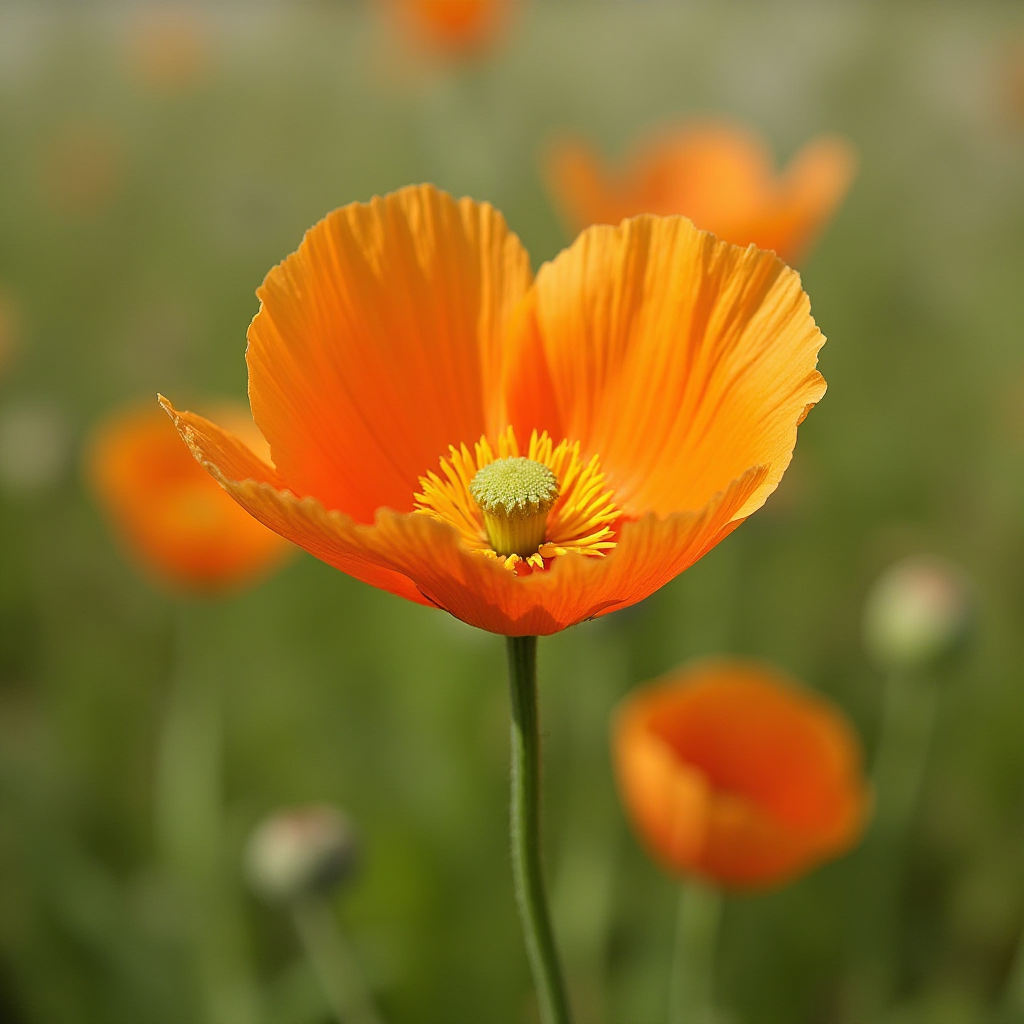


The gentle, non-addictive sedative for anxiety and insomnia
California poppy tea, made from the leaves, stems, and flowers of the Eschscholzia californica plant, is a gentle herbal remedy for nervous tension, anxiety, and insomnia. Unlike its infamous relative the opium poppy (Papaver somniferum), California poppy contains no narcotic alkaloids and is non-addictive . It has been used for centuries by Native American tribes as a mild sedative, pain reliever, and sleep aid, particularly for fussy babies and anxious adults . The plant is the state flower of California, with bright orange or yellow petals that close at night or during cold weather . The primary active compounds are alkaloids including protopine, californidine, and allocryptopine, which interact with GABA receptors in the brain to promote relaxation and reduce anxiety . Unlike pharmaceutical sedatives that can cause dependency and next-day grogginess, California poppy is gentle, non-habit-forming, and safe for children and adults when used appropriately . The tea has a bitter, earthy flavour. For those seeking a natural, non-addictive alternative for stress, anxiety, or sleeplessness, California poppy is an excellent choice.
“If you’d like to try the herbal teas mentioned in this article for yourself, we’ve curated a selection of high-quality, tested sources below. Every product we recommend has been chosen for purity and potency, or visit our online Herbal Tea Shop for even more choice”.
Looking for a specific herbal tea? Browse the full A–Z list here:
Herbal Teas A-Z List
Get the Free Herbal Tea Shop Cheat Sheet
What California poppy tea is and how it works
California poppy (Eschscholzia californica) is a perennial or annual herb native to the Pacific slopes of North America, ranging from California to Oregon and Arizona . The plant grows 2–24 inches tall with waxy, pale blue-green leaves and bright orange or yellow flowers that have four petals . All above-ground parts – leaves, stems, and flowers – are used medicinally . The root contains up to three times the active compounds found in the foliage, but all parts are traditionally used .
The primary active compounds in California poppy include protopine, californidine, allocryptopine, chelerythrine, and N-methyllaurotetanine (NMT) . These compounds work through several mechanisms:
- GABAergic activity – Protopine and allocryptopine stimulate GABA receptors, the main inhibitory receptors in the central nervous system. This produces calming, sedative, and anxiolytic effects .
- Antidepressant effects – NMT acts on serotonin receptors and has shown antidepressant-like effects in animal studies .
- Antispasmodic properties – The alkaloids relax smooth muscle, particularly in the uterus and bronchial airways, making it useful for menstrual cramps and spasmodic coughs .
- Mild analgesic effects – Reticuline, another alkaloid, can theoretically be converted to morphine and codeine, which may explain its mild pain-relieving properties .
Unlike the opium poppy, California poppy contains no narcotic alkaloids and is non-addictive . Herbalist Christopher Hobbs notes that California poppy is “one of the most reliable and safe relaxing herbs for children and adults” .
Key health benefits of California poppy tea
Anxiety and nervous tension relief is one of the primary uses of California poppy. The GABAergic alkaloids help calm an overactive nervous system without causing heavy sedation or dependency . One clinical study followed 264 participants for 3 months and found that a combination of California poppy plus hawthorn and magnesium was just as safe as, and more effective than, a placebo treatment for reducing mild to moderate anxiety .
Sleep support is another major benefit. California poppy has been traditionally used to promote restful sleep and help with insomnia . Unlike pharmaceutical sedatives, it is non habit-forming and does not typically cause next-day drowsiness . The root is considered more potent than the leaves and flowers .
Pain relief is a traditional use of California poppy. It has been used for mild to moderate pain, including headaches, toothaches, muscle aches, and menstrual cramps . The antispasmodic properties help relax smooth muscle, making it particularly useful for menstrual cramps and spasmodic coughs .
Nervous system support for children is a notable traditional use. Native American tribes used California poppy to soothe fussy babies and promote calm, healing sleep . Herbalist Christopher Hobbs notes it can be given safely to children for anxiety, sleeplessness, and restlessness .
Sedative withdrawal support is a lesser-known application. Health professionals use California poppy to help patients slowly reduce prescription drug use and withdraw from addictive substances, as it gently supports the nervous system without causing dependency .
Muscle relaxation and antispasmodic effects help with cramps, tension, and spasms in both the digestive tract and the uterus .
How to prepare California poppy tea
California poppy tea can be prepared from dried leaves and flowers. Tea preparation: Use one to two teaspoons of dried California poppy leaves and flowers per cup of water. Pour freshly boiled water over the herb and steep for 10–15 minutes. Strain and serve . Dosage: 2–3.5 grams up to four times daily . Flavour: California poppy tea has a bitter, earthy, slightly acrid flavour . Blending: California poppy blends well with other calming herbs such as chamomile, lemon balm, passionflower, or valerian. A blend with hawthorn and magnesium is commonly used for anxiety . Sweetening: Honey can help balance the bitterness.
Tincture alternative: Many herbalists prefer California poppy as a tincture (1–4 ml, 1–2 times daily) because the alcohol extracts more of the active compounds than water .
How to use California poppy tea safely
California poppy is generally safe for most people when used short-term. However, several precautions apply.
Pregnancy and breastfeeding: There is insufficient safety data. California poppy should be avoided during pregnancy and breastfeeding .
Sedatives and central nervous system depressants: California poppy may increase the effects of benzodiazepines (e.g., lorazepam, clonazepam, diazepam), barbiturates (e.g., phenobarbital), and opiates (e.g., morphine, methadone, oxycodone) . It also increases the effects of other sedating herbs such as valerian, kava, and St. John’s wort . Consult your healthcare provider before combining.
Alcohol: Avoid using California poppy with alcohol, as it may increase the risk of drowsiness .
Driving and operating machinery: If California poppy makes you drowsy, do not drive or operate heavy machinery .
Surgery: California poppy may increase the effects of anaesthesia and other medications used during and after surgery. Discontinue use at least two weeks before scheduled surgery .
Allergies: Individuals allergic to plants in the Papaveraceae (poppy) family should avoid California poppy .
Children: California poppy is considered safe for children when used appropriately. It has been traditionally used to soothe fussy babies and promote calm sleep . However, consult a healthcare provider before giving it to young children.
Duration of use: Consult a healthcare provider if your sleep problems last for more than four weeks in a row .
Recommended dosage
For anxiety and nervous tension, one cup of California poppy tea daily is sufficient. For sleep support, drink one cup 30–60 minutes before bed. For acute anxiety, an additional cup can be consumed as needed. The typical adult dose of the extract is 40 mg twice a day for anxiety . Tincture: 1–4 ml, 1–2 times daily . Do not exceed recommended doses.
Limitations of California poppy tea
California poppy tea is not a substitute for medical treatment, particularly for severe anxiety, chronic insomnia, or serious pain conditions. There are no useful studies conducted in humans that support the claims for sleep, anxiety, and pain relief . Most evidence is traditional or based on animal studies. The tea is less concentrated than tinctures or extracts. If you have significant anxiety or sleep disorders, consult a healthcare provider.
FAQ
Is California poppy tea safe?
California poppy is generally considered safe when used in recommended amounts. However, there is no strong scientific evidence to support its effectiveness . It can cause drowsiness and should not be combined with sedatives or alcohol.
Does California poppy tea make you sleepy?
Yes. California poppy has mild sedative properties and is traditionally used to promote sleep and relaxation. Unlike pharmaceutical sedatives, it is non-addictive.
Is California poppy the same as opium poppy?
No. California poppy (Eschscholzia californica) is from the same family (Papaveraceae) as the opium poppy, but it contains no narcotic alkaloids and is non-addictive .
Can I drink California poppy tea every day?
Short-term daily use is generally safe. If your sleep problems last for more than four weeks, consult a healthcare provider .
Is California poppy tea safe for children?
California poppy has been traditionally used to soothe fussy babies and promote calm sleep in children . Herbalist Christopher Hobbs notes it is “one of the most reliable and safe relaxing herbs for children” . However, consult a healthcare provider before giving it to young children.
Conclusion
California poppy tea is a gentle, non-addictive herbal remedy for anxiety, nervous tension, and insomnia. Unlike pharmaceutical sedatives, it does not cause dependency and is safe for children and adults when used appropriately. Its GABAergic alkaloids promote relaxation and calm without heavy sedation. The bitter, earthy flavour is not for everyone, but for those seeking a natural, non-habit-forming alternative for stress and sleeplessness, California poppy is an excellent choice. Use it short-term, be aware of potential interactions with sedatives, and avoid during pregnancy and breastfeeding.
Recommended Products
If you’d like to try the herbal teas mentioned in this article for yourself, we’ve curated a selection of high-quality, tested sources below. Every product we recommend has been chosen for purity and potency, or visit our online Herbal Tea Shop for even more choice.
California Poppy tea (loose leaf): unavailable – but coming soon,
California Poppy tea bags: unavailable – but coming soon,
Chamomile tea (loose leaf): https://amzn.to/3Pv6zgo (for blending)
Lemon balm tea (loose leaf): https://amzn.to/4bA4NlH (for blending)
Manuka Honey: https://amzn.to/47p7i9g
High-quality Garlic press: https://amzn.to/4sFBsxD
Tea infuser: https://amzn.to/4lAToGE
Glass teapot: https://amzn.to/4snGsGY
Storage boxes: https://amzn.to/47UQgQf
Assortment Box: https://amzn.to/3NFO9ZJ
Visit our online Herbal Tea Shop for more choice!
Do you read novels? Visit our bookshop to check out the ‘culturally grounded, Otherworldly narratives’ by Owen Jones.
Looking for a specific herbal tea? Browse the full A–Z list here:
Herbal Teas A-Z List
Get the Free Herbal Tea Shop Cheat Sheet
Further Reading
For a full evidence-based overview of herbal tea benefits, safety, and quality considerations, read our complete guide to Herbal Tea Benefits
1] For more on anxiety and stress relief, see:
Best Herbal Teas for Anxiety and Stress Relief
2] For sleep support, see:
Herbal Teas for Sleep
3] For nervous tension, see:
Best Herbal Teas for Nervous Tension
4] For safety guidance on herbal teas, see:
Are Herbal Teas Safe?
5] For potential interactions with medications, see:
Herbal Tea and Medication
References
1] Pharmasave – California Poppy
Provides safety information, drug interactions, and precautions for California poppy.
2] WebMD – California Poppy: Overview, Uses, Side Effects, Precautions
Offers consumer-level safety information and interactions.
3] Dr. Christopher Hobbs, Ph.D. – California Poppy
Provides comprehensive herbal monograph from a respected clinical herbalist, including traditional uses, clinical applications, and safety.
4] Poison Control – What to know about California poppy products
Provides scientific analysis of alkaloid content and notes lack of human studies supporting efficacy.
5] Hello Doctor Philippines – California Poppy
Provides pharmacological information on alkaloid mechanisms of action.