

The adaptogenic root for energy, stress, and vitality
Ginseng tea, made from the slow-growing root of the Panax plant, is one of the most respected herbal remedies in Traditional Chinese Medicine. The name “Panax” comes from the Greek word for “all-healing”. For thousands of years, ginseng has been used to restore energy, improve mental clarity, support the immune system, and help the body adapt to stress. Unlike stimulants that provide a temporary jolt followed by a crash, ginseng is an adaptogen – it helps the body resist the effects of stress and return to balance. There are two main varieties: Asian ginseng (Panax ginseng), which is considered more stimulating and warming, and American ginseng (Panax quinquefolius), which is considered more cooling and calming. Both have similar properties, but American ginseng is generally preferred for long-term use and for people who are sensitive to stimulation. Ginseng tea is not a daily beverage for everyone – it is potent and should be used in cycles. But for those struggling with fatigue, poor concentration, or stress-related exhaustion, ginseng is a powerful ally.
“If you’d like to try the herbal teas mentioned in this article for yourself, we’ve curated a selection of high-quality, tested sources below. Every product we recommend has been chosen for purity and potency, or visit our online Herbal Tea Shop for even more choice”.
Looking for a specific herbal tea? Browse the full A–Z list here:
Herbal Teas A-Z List
Get the Free Herbal Tea Shop Cheat Sheet
What ginseng tea is and how it works
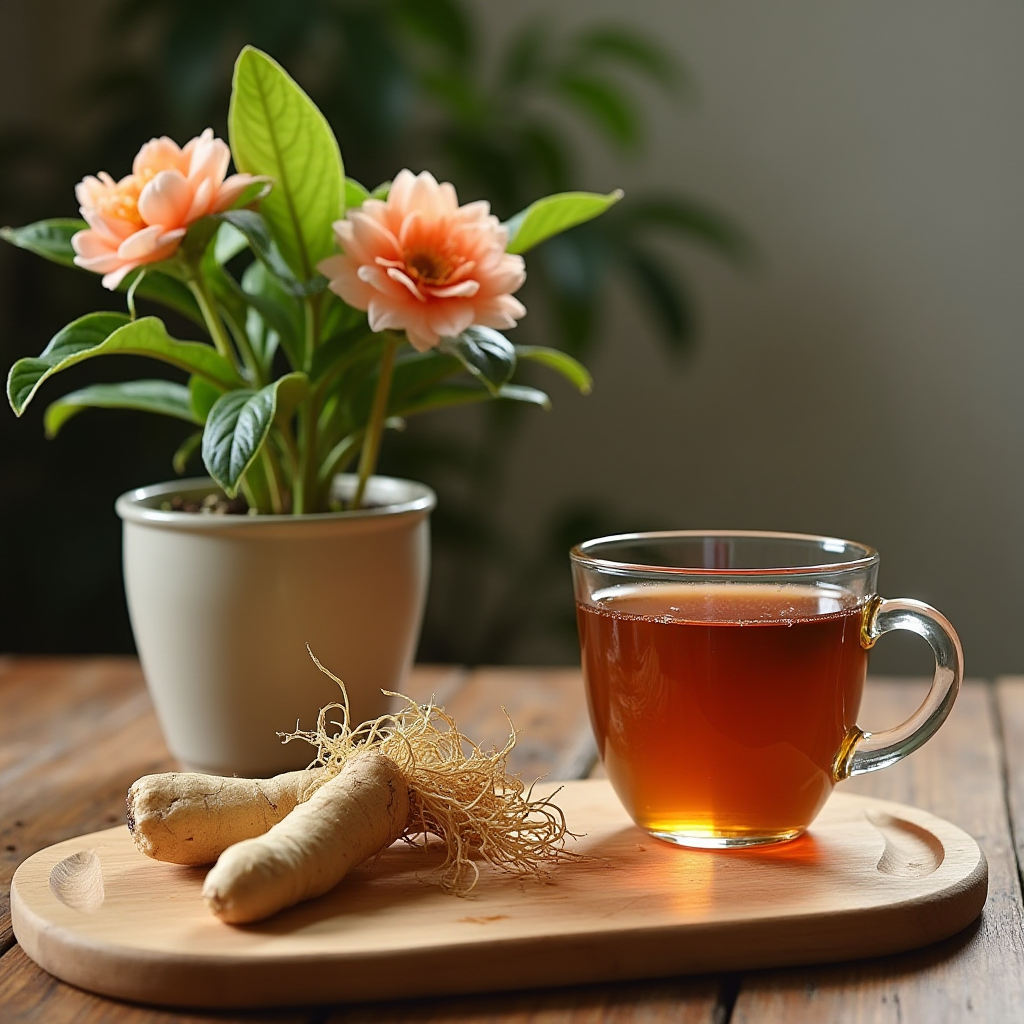
Ginseng (Panax ginseng and Panax quinquefolius) is a perennial plant that takes four to six years to reach maturity. The root is harvested, dried, and used whole, sliced, or ground into powder. The name “ginseng” comes from the Chinese rénshēn, meaning “man-root”, referring to the root’s occasional human-like shape.
The primary active compounds in ginseng are ginsenosides (also called panaxosides). There are over 30 different ginsenosides, and they vary between Asian and American varieties. These compounds work through several mechanisms: adaptogenic effects (helping the body resist stress by modulating cortisol and the HPA axis), neuroprotective properties (protecting brain cells and improving cognitive function), immune modulation (enhancing the activity of natural killer cells), anti-inflammatory effects, antioxidant activity, and energy metabolism support (improving cellular energy production).
Asian ginseng (Panax ginseng) is considered more “yang” – warming, stimulating, and better for acute fatigue and low energy. American ginseng (Panax quinquefolius) is considered more “yin” – cooling, calming, and better for chronic stress, burnout, and people who find Asian ginseng too stimulating.
Key health benefits of ginseng tea
Energy and fatigue reduction is the most well-known benefit of ginseng. Studies have shown that ginseng can reduce feelings of physical and mental fatigue, improve exercise performance, and speed recovery after exertion. Unlike caffeine, ginseng does not cause a crash or interfere with sleep when taken earlier in the day. It works by supporting the body’s own energy production rather than artificially stimulating the nervous system.
Cognitive function and mental clarity are another major benefit. Ginseng has been shown to improve memory, attention, and reaction time in healthy adults. It may also protect against age-related cognitive decline. For those experiencing “brain fog” from stress, lack of sleep, or ageing, ginseng tea can help restore mental sharpness.
Stress resilience comes from ginseng’s adaptogenic properties. Chronic stress wears down the body, contributing to fatigue, poor sleep, weakened immunity, and accelerated ageing. By helping the body regulate cortisol and adapt to stressors, ginseng builds long-term resilience. Unlike acute sedatives that mask symptoms, adaptogens like ginseng address the root cause.
Immune support has been demonstrated in several studies. Ginseng has been shown to increase the activity of natural killer cells and other immune markers, helping the body resist colds, flu, and other infections. Regular use may reduce the frequency and severity of respiratory infections.
Blood sugar regulation may be supported by ginseng. Some studies suggest that both Asian and American ginseng can improve insulin sensitivity and lower blood glucose levels after meals. This is particularly relevant for people with prediabetes or type 2 diabetes.
Erectile dysfunction is a traditional use of ginseng that has some research support. Studies have shown that ginseng can improve erectile function, possibly by increasing nitric oxide production and improving blood flow.
Anti-inflammatory effects help reduce systemic inflammation, which is linked to many chronic diseases. Ginseng’s ginsenosides have demonstrated anti-inflammatory activity in both laboratory and clinical studies.
Asian vs American ginseng – which one to choose?
| Feature | Asian Ginseng (Panax ginseng) | American Ginseng (Panax quinquefolius) |
|---|---|---|
| Nature | Warming, stimulating | Cooling, calming |
| Best for | Acute fatigue, low energy, cold hands and feet | Chronic stress, burnout, feeling “wired but tired” |
| Caffeine | None | None |
| Use | Short-term, in cycles | Longer-term, gentler |
| Caution | May cause twitchiness in sensitive people | Better tolerated |
If you are unsure which to try, start with American ginseng. It is gentler and less likely to cause overstimulation.
How to prepare ginseng tea
Ginseng tea can be prepared from dried root slices, powder, or tea bags. From dried root slices: Use one to two teaspoons of dried ginseng slices per cup of water. Simmer in water for 10–15 minutes (decoction method). Strain and serve. From powder: Use one-quarter to one-half teaspoon of ginseng powder per cup of water. Simmer for 5–10 minutes, then strain. From tea bags: Steep one tea bag in freshly boiled water for 5–10 minutes. Flavour: Ginseng tea has an earthy, slightly bitter, and sweet flavour with a hint of spice. It is an acquired taste. Blending: Ginseng blends well with other adaptogens like ashwagandha or with warming spices like ginger and cinnamon. Honey improves palatability.
How to use ginseng tea safely
Ginseng is generally safe for most people when used short-term and in cycles. However, several precautions apply.
Cycle your use. Ginseng is not for daily long-term use. Many herbalists recommend taking ginseng for 2–3 weeks, then taking a 1–2 week break. This prevents tolerance and allows the body to reset.
Insomnia. Ginseng can be stimulating. Take it earlier in the day – morning or early afternoon – not before bed.
Hormone-sensitive conditions. Ginseng may have estrogenic effects. Those with breast cancer, uterine cancer, or endometriosis should consult a healthcare provider before use.
Blood thinners. Ginseng may interact with warfarin and other anticoagulants. Consult your healthcare provider.
Diabetes medications. Ginseng may lower blood sugar. Monitor your levels if you take diabetes medication.
MAOIs and stimulants. Ginseng may interact with MAO inhibitors and other stimulant medications. Consult your healthcare provider.
Pregnancy and breastfeeding. Ginseng is not recommended during pregnancy or breastfeeding due to limited safety data.
Surgery. Discontinue ginseng at least two weeks before scheduled surgery, as it may affect blood sugar and blood pressure.
Children. Ginseng is not recommended for children.
Recommended dosage
For general energy and stress support, one cup of ginseng tea daily is sufficient. For more targeted effects – such as cognitive support or immune health – one to two cups daily may be consumed. Use for 2–3 weeks, then take a 1–2 week break. Use American ginseng for longer-term support.
Limitations of ginseng tea
Ginseng tea is not a substitute for medical treatment, particularly for chronic fatigue syndrome, depression, diabetes, or erectile dysfunction. Its effects are modest and work best as part of a broader approach that includes a balanced diet, regular exercise, adequate sleep, and stress management. Claims that ginseng “cures” fatigue or “prevents” dementia are unsupported; it is best understood as a supportive tool for energy and stress resilience.
FAQ
What is the difference between Asian and American ginseng?
Asian ginseng (Panax ginseng) is warming and stimulating, best for acute fatigue. American ginseng (Panax quinquefolius) is cooling and calming, best for chronic stress and burnout.
Does ginseng tea have caffeine?
No. Ginseng is caffeine-free. Its energising effects come from ginsenosides, not stimulants.
Can I drink ginseng tea every day?
Ginseng is best used in cycles – 2–3 weeks on, 1–2 weeks off – to prevent tolerance. American ginseng is gentler and can be used for longer periods than Asian ginseng.
How long does it take for ginseng tea to work?
Acute effects on energy and focus may be noticed within hours. For stress resilience and cumulative benefits, consistent use over several weeks is required.
Is ginseng safe for high blood pressure?
Ginseng may affect blood pressure. Some studies show it lowers blood pressure; others show it can raise it. Monitor your readings and consult your healthcare provider.
Conclusion
Ginseng tea is a powerful adaptogenic herb for energy, stress resilience, cognitive function, and immune support. Unlike stimulants that mask fatigue, ginseng helps the body adapt to stress and restore balance. Asian ginseng is warming and stimulating; American ginseng is cooling and calming. For most people, American ginseng is the better choice for long-term use. Use ginseng in cycles, take it earlier in the day, and be aware of potential interactions with medications. Used wisely, ginseng tea can be a valuable tool for combating fatigue and building resilience.
Recommended Products
If you’d like to try the above herbal teas for yourself, we’ve curated a selection of high-quality, tested sources below. Every product we recommend has been chosen for purity and potency, or visit our online Herbal Tea Shop for even more choice.
Asian Ginseng tea (loose leaf): https://amzn.to/3QDoout
Asian Ginseng tea bags: https://amzn.to/4uffAcy
American Ginseng tea (loose leaf): https://amzn.to/4tUQ9NJ
Ginger tea (loose leaf): https://amzn.to/3PmSWQw (for blending)
Cinnamon tea (loose leaf): https://amzn.to/4lL23qa (for blending)
Manuka Honey: https://amzn.to/47p7i9g
High-quality Garlic press: https://amzn.to/4sFBsxD
Tea infuser: https://amzn.to/4lAToGE
Glass teapot: https://amzn.to/4snGsGY
Storage boxes: https://amzn.to/47UQgQf
Assortment Box: https://amzn.to/3NFO9ZJ
Visit our online Herbal Tea Shop for more choice!
Do you read novels? Visit our bookshop to check out the ‘culturally grounded, Otherworldly narratives’ by Owen Jones.
Looking for a specific herbal tea? Browse the full A–Z list here:
Herbal Teas A-Z List
Get the Free Herbal Tea Shop Cheat Sheet
Further Reading
For a full evidence-based overview of herbal tea benefits, safety, and quality considerations, read our complete guide to Herbal Tea Benefits
1] For more on adaptogens and stress management, see:
Herbal Teas for Stress Management
2] For energy and vitality, see:
Matcha Tea
3] For immune support, see:
Herbal Tea for Inflammation
4] For safety guidance on herbal teas, see:
Are Herbal Teas Safe?
5] For potential interactions with medications, see:
Herbal Tea and Medication
References
1] National Center for Complementary and Integrative Health (NCCIH) – Asian Ginseng
Provides evidence-based information on ginseng safety and research.
2] National Center for Complementary and Integrative Health (NCCIH) – American Ginseng
Offers evidence-based information on American ginseng uses and safety.
3] National Institutes of Health (NIH) – Ginseng and Cognitive Function
Peer-reviewed study on ginseng’s effects on mental performance.
4] Cleveland Clinic – Ginseng Benefits
Provides practical guidance on ginseng uses and safety.